
www.magazine-industry-usa.com
02
'26
Written on Modified on
Clarios Expands U.S. Supercapacitor Assembly in Michigan
Meadowbrook facility in Holland will assemble 12 V and 48 V automotive supercapacitor systems to support OEM programs and strengthen domestic supply chains.
www.clarios.com
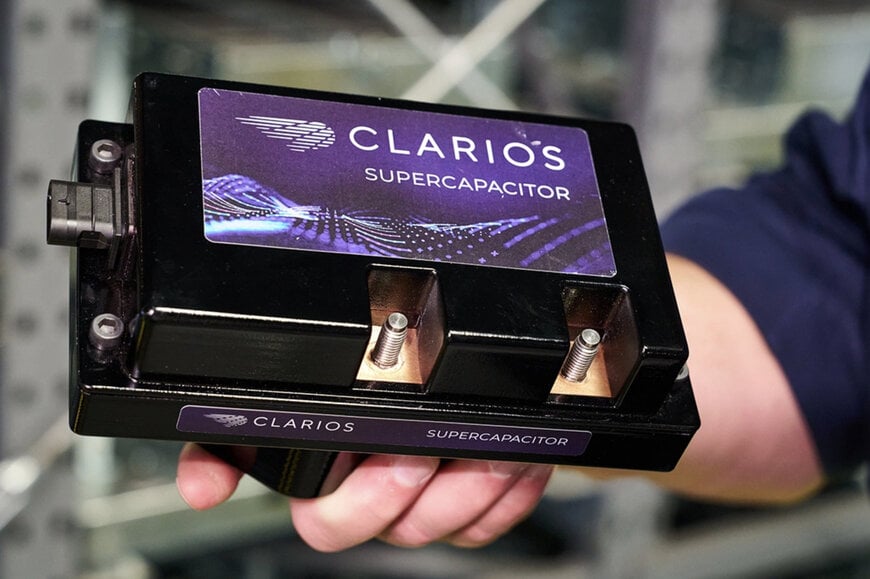
Automotive manufacturers adopting advanced 12 V and 48 V electrical architectures increasingly require reliable, short-duration energy storage to support safety-critical and stability functions. In response to growing OEM demand, Clarios has selected its Meadowbrook facility in Holland, Michigan, as the U.S. assembly site for its automotive supercapacitor systems.
The decision supports industrialization of major OEM programs while reinforcing domestic supply chain resilience for advanced low-voltage energy storage technologies.
U.S.-based assembly for low-voltage energy systems
The Meadowbrook plant will assemble supercapacitor modules designed for integration into 12 V and 48 V automotive platforms. These systems are engineered to deliver rapid charge–discharge performance, supporting applications where instantaneous power delivery and voltage stabilization are required.
The move forms part of Clarios’ broader $6 billion U.S. investment strategy aimed at strengthening domestic manufacturing capacity and reducing exposure to global supply chain disruptions. Local assembly also supports OEM sourcing strategies that prioritize regional production and logistics stability.
Supercapacitors in modern automotive architectures
Supercapacitors—also referred to as ultracapacitor modules (UCM) in certain OEM applications—are increasingly deployed in low-voltage mobility systems to complement conventional batteries.
Within 12 V and 48 V vehicle architectures, these systems provide:
- High power density for rapid energy discharge
- Fast recharge capability
- Voltage stabilization during transient loads
- Redundancy for safety-critical subsystems
Typical automotive applications include steer-by-wire systems, chassis stabilization, voltage buffering and fail-operational functions. When paired with absorbed glass mat (AGM) batteries, supercapacitors enhance overall system reliability by mitigating voltage drops during peak loads.
Unlike batteries optimized for energy density, supercapacitors are designed for short-duration, high-power delivery cycles. This makes them suitable for functions requiring immediate response and high cycle life.
Integration of Maxwell’s supercapacitor expertise
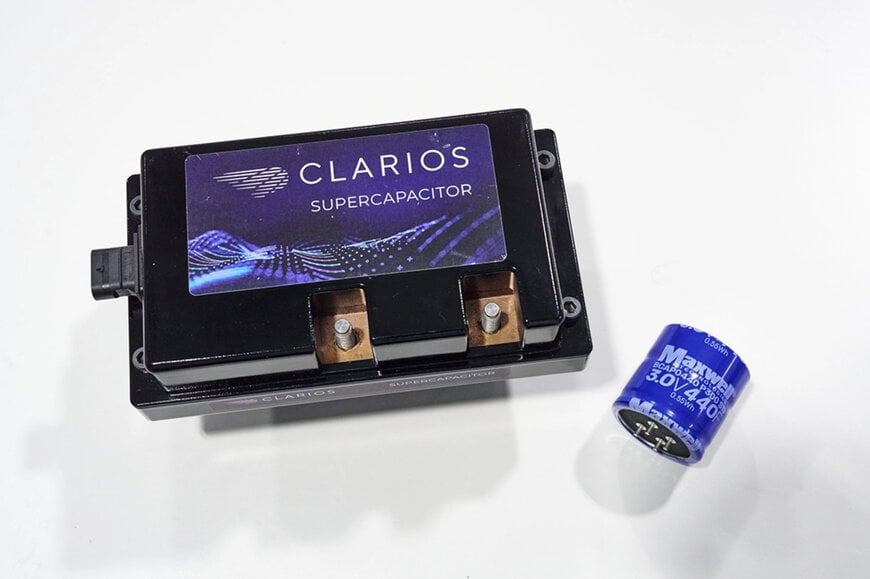
The program builds on the technical capabilities of Maxwell Technologies, which operates as an independent business unit within Clarios. Maxwell contributes established expertise in supercapacitor cell and module development, including electrode design and module integration for high-power applications.
Combining Maxwell’s cell-level innovation with Clarios’ system-level integration supports a systems-oriented approach to low-voltage energy management. Rather than functioning as standalone components, supercapacitor modules are integrated into broader power and stability architectures increasingly adopted in next-generation vehicles.
Position within the automotive energy storage market
In the automotive sector, supercapacitors compete and coexist with lithium-ion and advanced lead-acid battery solutions depending on application requirements. Key differentiating criteria typically include:
Unlike batteries optimized for energy density, supercapacitors are designed for short-duration, high-power delivery cycles. This makes them suitable for functions requiring immediate response and high cycle life.
Integration of Maxwell’s supercapacitor expertise
The program builds on the technical capabilities of Maxwell Technologies, which operates as an independent business unit within Clarios. Maxwell contributes established expertise in supercapacitor cell and module development, including electrode design and module integration for high-power applications.
Combining Maxwell’s cell-level innovation with Clarios’ system-level integration supports a systems-oriented approach to low-voltage energy management. Rather than functioning as standalone components, supercapacitor modules are integrated into broader power and stability architectures increasingly adopted in next-generation vehicles.
Position within the automotive energy storage market
In the automotive sector, supercapacitors compete and coexist with lithium-ion and advanced lead-acid battery solutions depending on application requirements. Key differentiating criteria typically include:
- Power density versus energy density
- Charge–discharge cycle life
- Response time under transient loads
- Thermal stability and operating life
Supercapacitors offer significantly faster charge–discharge response compared to traditional batteries, making them suitable for voltage stabilization and backup power in electrified and software-defined vehicle architectures.
By localizing assembly in Michigan, Clarios strengthens its ability to support North American OEM production programs while aligning with broader industry shifts toward resilient, regionally anchored supply chains.
Supporting long-term OEM readiness
Assembly operations at the Meadowbrook facility represent a milestone in scaling supercapacitor production for high-volume automotive applications. As vehicles integrate more electronic control systems and electrified subsystems, low-voltage energy storage must accommodate higher peak loads and increased redundancy requirements.
Through domestic manufacturing expansion and integration of supercapacitor expertise, Clarios positions its U.S. operations to support the evolving performance and reliability demands of next-generation automotive platforms.
www.clarios.com
By localizing assembly in Michigan, Clarios strengthens its ability to support North American OEM production programs while aligning with broader industry shifts toward resilient, regionally anchored supply chains.
Supporting long-term OEM readiness
Assembly operations at the Meadowbrook facility represent a milestone in scaling supercapacitor production for high-volume automotive applications. As vehicles integrate more electronic control systems and electrified subsystems, low-voltage energy storage must accommodate higher peak loads and increased redundancy requirements.
Through domestic manufacturing expansion and integration of supercapacitor expertise, Clarios positions its U.S. operations to support the evolving performance and reliability demands of next-generation automotive platforms.
www.clarios.com
-2296-71282-204124.png)