
www.magazine-industry-usa.com
28
'26
Written on Modified on
Northrop Grumman and NASA Integrate Solid Rocket Boosters for Artemis II Launch
Northrop Grumman and NASA collaborate to deploy five-segment solid rocket boosters on the SLS to enable crewed lunar flyby operations and validate deep-space systems.
www.northropgrumman.com
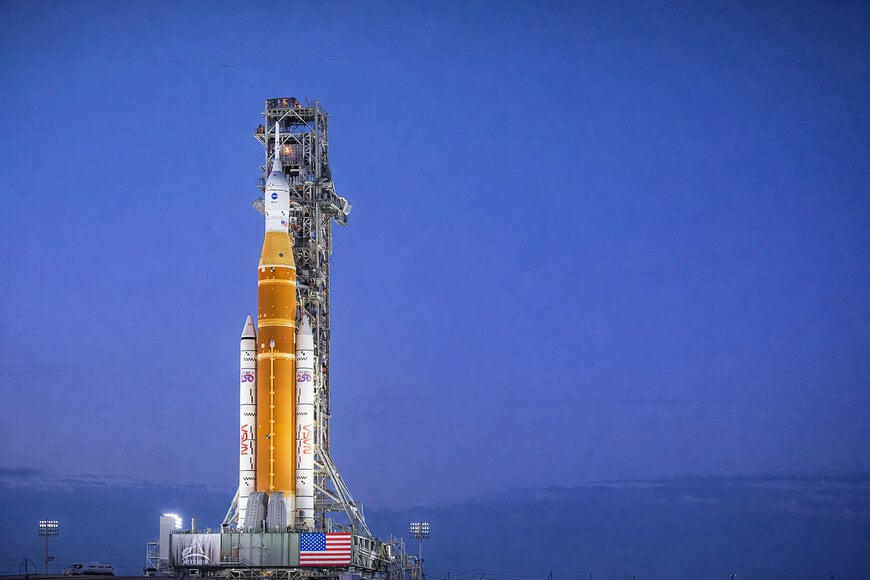
Northrop Grumman and the U.S. National Aeronautics and Space Administration (NASA) are jointly deploying twin five-segment solid rocket boosters as part of the Space Launch System (SLS) for the Artemis II mission, the first crewed flight beyond lunar orbit since the Apollo era. The technical collaboration supports deep-space exploration goals, including systems validation for sustainable lunar operations and future Mars missions.
Context of the Cooperation
NASA leads the Artemis program, a multiyear initiative to return humans to lunar vicinity and establish a foundation for extended operations on and around the Moon. Artemis II, scheduled for launch from Kennedy Space Center’s Pad 39B, will be the second SLS flight and first with astronauts aboard Orion, carrying a four-person crew on a ~10-day lunar flyby orbit.
Northrop Grumman is contracted by NASA to supply critical propulsion and safety components for SLS. The prime industrial role for Northrop Grumman in Artemis II centers on solid rocket boosters that augment core stage thrust and on motors for the Orion Launch Abort System that provide crew safety during ascent.
Technical Solution and Responsibilities
The SLS integrates two five-segment solid rocket boosters manufactured by Northrop Grumman. Each booster measures approximately 177 feet in overall length and generates about 3.6 million pounds of thrust at ignition, collectively supplying more than 75 % of the vehicle’s total liftoff thrust. The design is an evolution of four-segment boosters from the Space Shuttle program, scaled to meet higher impulse requirements for deep-space missions.
These solid rocket boosters employ modular interfaces between segments, thrust vector control systems for guidance, and industry-standard inertial and telemetry instrumentation to integrate with SLS avionics. Boosters are structurally coupled to the SLS core stage and release after burnout once the propellant is expended.
In addition, Northrop Grumman manufactures the attitude control motor and abort motor used in the Orion spacecraft’s Launch Abort System. These motors conform to safety standards for crewed flight and are integrated atop the SLS stack to activate during ascent emergencies, providing controlled separation of the crew module.
Deployment and Implementation
The integration of Northrop Grumman’s solid rocket boosters follows delivery and stacking operations at NASA’s Kennedy Space Center. Booster segments are assembled on the mobile launcher platform, then interfaced with the SLS core stage and Orion spacecraft. Prelaunch testing sequences include integrated systems checks and propulsion verification to ensure compliance with flight readiness criteria.
Other aspects of deployment include qualification and static testing during the development phase, where full-scale motor firings validate manufacturing processes and materials performance before flight certification.
Applications and Use Cases
The booster integration supports the Artemis II mission’s objective to verify human-rated spacecraft performance, life support systems, and navigation in deep space. In technical terms, this encompasses structural vibration environments, propulsion coupling dynamics, and abort system responsiveness in crewed flight regimes.
Results or Expected Impact
The technical cooperation enhances launch vehicle capability for missions beyond Earth orbit. With boosters supplying the majority of thrust at liftoff, the SLS can accelerate Orion and associated payloads onto lunar transfer trajectories, enabling a mission profile that tests deep-space operations and hardware endurance.
By jointly implementing these propulsion and safety systems, NASA and Northrop Grumman aim to advance industrial automation and system integration practices for large solid rocket motors, contributing measurable improvements in reliability and performance for future Artemis missions and beyond.
www.northropgrumman.com
-2296-71282-204124.png)