
www.magazine-industry-usa.com
28
'26
Written on Modified on
Kyocera Launches Thermal Printhead for Mobile Cold-Chain Barcode Printers
Enhanced pulse durability maintains direct thermal barcode readability in sub-zero logistics operations while a compact mechanical profile optimizes handheld enclosure designs.
global.kyocera.com
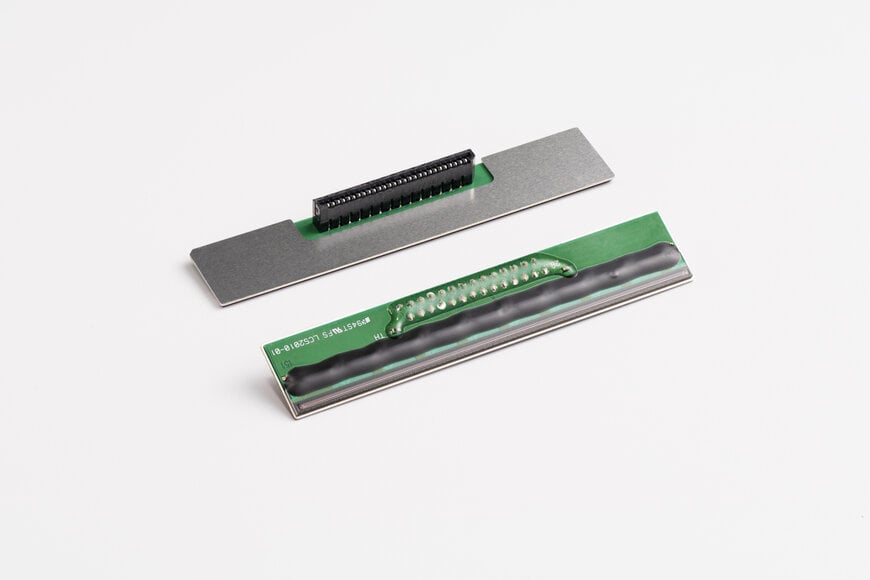
Kyocera Corporation has announced the KMH Series thermal printhead, scheduling volume production for October 2026. The compact printing component provides direct thermal and thermal transfer imaging for handheld mobile printers operating across cold-chain logistics, retail warehousing, and clinical healthcare environments.
Resistive Element Resilience in Sub-Zero Warehouse Environments
Operating mobile barcode printers within refrigerated and sub-zero storage facilities presents critical thermodynamic challenges. Low ambient temperatures accelerate heat dissipation from the printhead substrate into surrounding air and cold media surfaces. To achieve proper optical density and chemical activation on direct thermal label chemistry, the printer control system must apply longer energization periods or higher drive voltages per dot cycle.
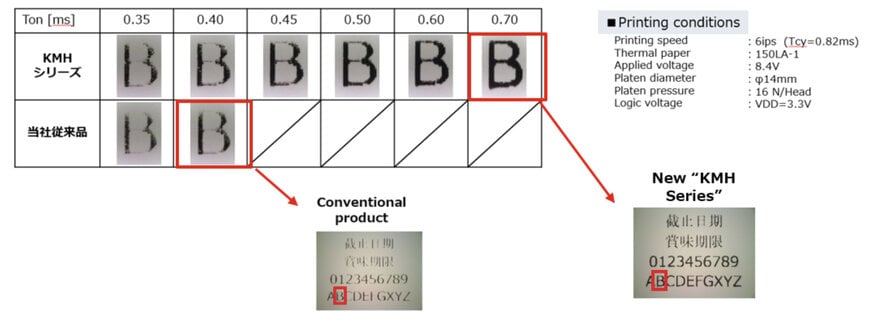
In conventional thermal printheads, repeated exposure to extended electrical pulses induces severe thermal shock, leading to mechanical stress, layer delamination, and premature resistance degradation across the microscopic heating elements. The KMH Series incorporates proprietary thin-film heating element metallurgy engineered for enhanced pulse durability. This structure tolerates elevated energy cycling without heating element breakdown, preventing image voids and illegible barcodes on cold food packaging, frozen specimen vials, and pharmaceutical logistics waybills.
Mechanical Integration and Mobile Hardware Optimization
The component architecture reduces the total footprint of the printhead assembly, addressing spatial limitations within portable, battery-powered printing equipment. Minimizing the mechanical envelope provides original equipment manufacturers with layout flexibility to accommodate high-capacity lithium-ion battery packs, internal sensor boards, and rugged drop-resistant enclosure designs without increasing overall terminal weight.
Target application areas cover automated logistics centers, retail point-of-sale shelf labeling, field-service mobility, and healthcare tracking systems requiring durable wristband and specimen identification. Kyocera plans to continue leveraging four decades of thermal printing device manufacturing to supply high-resolution, high-speed printheads supporting industrial digitization and automated supply-chain traceability.
Additional Context:
This section details technical specifications and competitive benchmarking not included in the original product announcement
Thermal printhead operational benchmarks are evaluated through electrical pulse life, expressed in millions of pulses per dot (typically 100 million pulses under standard conditions), and abrasion resistance ratings (standardized around 50 to 100 kilometers of continuous media transit).
In the portable printing market, major thermal component manufacturers including Rohm Semiconductor (with lines such as the KD and KA series) and Kyocera benchmark their devices around 7.2-volt and 4.2-volt battery-driven configurations at dot densities of 203 dots per inch (8 dots/mm) and 300 dots per inch (12 dots/mm). While standard mobile printheads are optimized for room-temperature receipt printing with low duty cycles, cold-environment logistics demand specialized glaze layers to minimize heat loss to the ceramic substrate.
Rohm addresses portable efficiency through low-voltage partial-glaze structures that limit current drain from battery sources during short pulses. In contrast, Kyocera’s KMH Series targets prolonged pulse widths under high energy loads, optimizing the thermal expansion coefficient between the resistive layer, conductive electrodes, and protective overcoat. This prevents micro-cracking caused by localized thermal gradients when heating elements switch rapidly between sub-zero ambient states and print-activation temperatures above 200 degrees Celsius.
Edited by Natania Lyngdoh, Induportals editor, assisted by AI.
www.global.kyocera.com
-2296-71282-204124.png)