
www.magazine-industry-usa.com
22
'26
Written on Modified on
BHP & China Baowu renew five-year steel decarbonisation partnership
Partnership advances lower-emissions steelmaking, modified blast furnaces, DRI trials and electric smelting, targeting significantly reduced carbon intensity across operations.
www.bhp.com
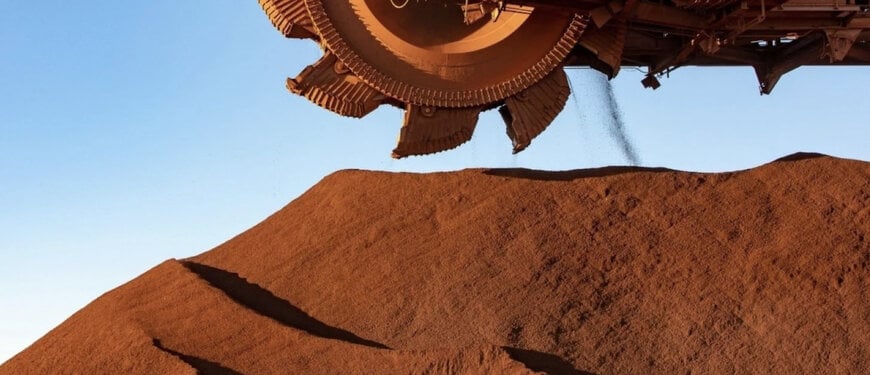
BHP and China Baowu Steel have extended their joint development agreement through a five-year Memorandum of Understanding to deploy low-emission metallurgical processes across existing and emerging production assets. The initiative targets technical pathways in heavy industry, specifically addressing carbon abatement in blast furnace operations and hydrogen-based reduction systems.
Operational Challenges and Scope of Collaboration
Primary steelmaking remains an energy-intensive industrial sector characterized by substantial process-related carbon dioxide emissions from conventional carbon-based reducing agents. Addressing these emissions requires integration across the raw material supply chain and operational smelting infrastructure. BHP provides metallurgical feedstock and co-funds technical trials, while China Baowu manages industrial testing facilities, furnace operations, and downstream processing equipment. This combined expertise enables the companies to de-risk alternate reduction pathways using existing iron ore supplies.
Technical Pathways and Process Modification
The joint initiative evaluates two primary technological routes: modified blast furnace processes and shaft furnace direct reduction linked to electric smelting.
In conventional blast furnace applications, the program assesses operational adjustments using Pilbara iron ores to decrease process emissions. The objective is to achieve a 30 percent reduction in operational carbon dioxide intensity compared to baseline blast furnace standards, with modeled potential exceeding 80 percent when integrated with point-source carbon storage and grid-scale renewable electricity.
The second technical track focuses on direct reduced iron (DRI) processes utilizing hydrogen reducing agents rather than metallurgical coke. Mined ores undergo solid-state reduction before processing in China Baowu's planned demonstration electric smelting furnace (ESF). This configuration allows lower-grade hematite ores, traditionally restricted to blast furnaces, to be processed into liquid hot metal suitable for standard basic oxygen or electric arc refining.
Testing Phases and Documented Results
The technical program builds on pilot trials that began in November 2020. Field testing conducted in China Baowu's one-million-tonne-per-annum hydrogen-based direct reduction furnace demonstrated iron ore processing with a 50 percent lower carbon dioxide intensity relative to standard blast furnace hot metal. Subsequent pilot electric smelting tests indicated compliance with near-zero emissions thresholds, defined as 0.40 tonnes of carbon dioxide equivalent per tonne of crude steel under the ResponsibleSteel International Standard V2.0.
Research and engineering development are coordinated through the China Baowu, Monash University, and BHP Industry Knowledge Centre for Low Carbon Metallurgy, established in 2024 to support multi-institution research across Australia and China.
Operational and Industry Impact
Demonstrating hydrogen-based reduction and modified furnace injection provides an operational framework for integrating variable-grade iron ore reserves into alternative smelting configurations. These verified trial parameters offer process stability, maintain metallurgical quality in liquid hot metal, and establish engineering requirements for retrofitting operating blast furnace infrastructure across the global steel industry.
Edited by Natania Lyngdoh, Induportals editor, assisted by AI.
www.bhp.com
-2296-71282-204124.png)