
www.magazine-industry-usa.com
24
'26
Written on Modified on
BHP and SiTration Pilot Copper Recovery from Mining-Impacted Water
BHP is collaborating with MIT spin-out SiTration to trial an advanced mineral recovery process on legacy mining-impacted water in Arizona.
www.bhp.com
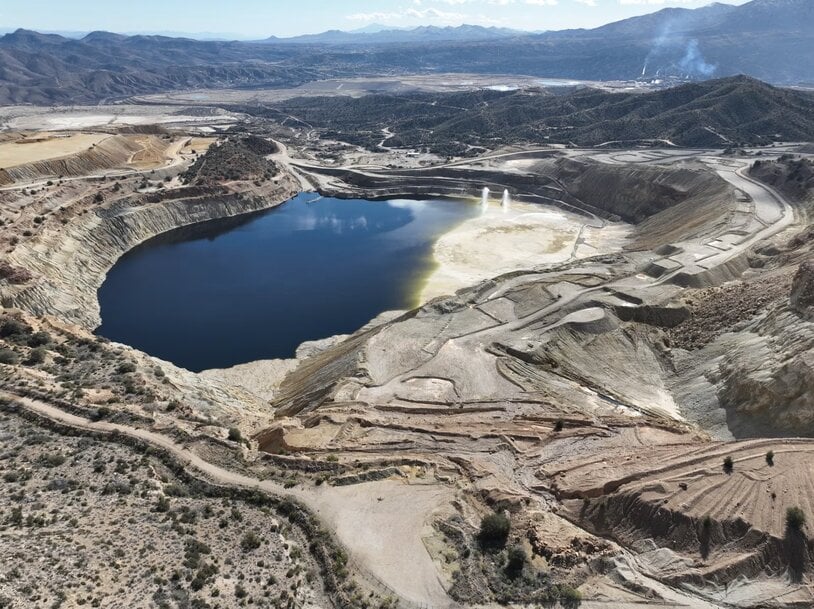
BHP has partnered with SiTration to deploy a two-stage pilot evaluating copper extraction technology at BHP’s legacy Copper Cities site in the Globe-Miami mining district of Arizona. The project aims to validate the continuous, autonomous extraction of copper from dilute and complex legacy water streams.
Two-Stage Testing Program and Pilot Objectives
The field trial builds on bench-scale testing that demonstrated the production of London Metal Exchange (LME) Grade A copper cathodes:
- Stage One Evaluation: Initiated in August to test continuous, autonomous copper extraction operations over an initial one-month timeline.
- Stage Two Scale-Up: A larger deployment planned for later in the year targeting the production of up to two tonnes of commercial-scale copper cathodes across an approximate two-month period.
Historical Site Context
The Copper Cities facility operated as an open-pit copper mine between 1954 and 1975, with secondary leaching operations continuing through 1982. Managed under BHP’s Legacy Assets division, the site serves as an operational testbed for processing technologies that recover critical mineral value from historic tailings and impacted water flows.
Additional Context
This section details technical specifications not included in the original news release.
Mining-impacted water and acid mine drainage (AMD) typically contain low, sub-economic concentrations of dissolved base metals alongside high levels of sulfates, iron, and suspended solids at low pH levels (often pH 2.0 to 3.5). Conventional processing routes require extensive neutralization using lime or limestone, which generates large volumes of metal-laden gypsum sludge requiring hazardous disposal without recovering the underlying mineral value.
Advanced electrochemical and membrane-based extraction systems utilize porous silicon or carbon-nanotube conductive membrane filters combined with targeted electrodialysis and electrowinning stages. By applying an electrical potential across selective filtration barriers, charged copper ions are concentrated directly from acidic feedstocks, bypassing solvent extraction circuits and organic reagent loss. LME Grade A specification requires a minimum copper cathode purity of 99.9935 percent, restricting deleterious trace impurities—including lead, selenium, tellurium, bismuth, and arsenic—to strict parts-per-million limits.
Edited by Romila DSilva, Induportals Editor, with AI assistance.
The Copper Cities facility operated as an open-pit copper mine between 1954 and 1975, with secondary leaching operations continuing through 1982. Managed under BHP’s Legacy Assets division, the site serves as an operational testbed for processing technologies that recover critical mineral value from historic tailings and impacted water flows.
Additional Context
This section details technical specifications not included in the original news release.
Mining-impacted water and acid mine drainage (AMD) typically contain low, sub-economic concentrations of dissolved base metals alongside high levels of sulfates, iron, and suspended solids at low pH levels (often pH 2.0 to 3.5). Conventional processing routes require extensive neutralization using lime or limestone, which generates large volumes of metal-laden gypsum sludge requiring hazardous disposal without recovering the underlying mineral value.
Advanced electrochemical and membrane-based extraction systems utilize porous silicon or carbon-nanotube conductive membrane filters combined with targeted electrodialysis and electrowinning stages. By applying an electrical potential across selective filtration barriers, charged copper ions are concentrated directly from acidic feedstocks, bypassing solvent extraction circuits and organic reagent loss. LME Grade A specification requires a minimum copper cathode purity of 99.9935 percent, restricting deleterious trace impurities—including lead, selenium, tellurium, bismuth, and arsenic—to strict parts-per-million limits.
Edited by Romila DSilva, Induportals Editor, with AI assistance.
-2296-71282-204124.png)