
www.magazine-industry-usa.com
03
'26
Written on Modified on
Vertical Reciprocating Conveyors for Semiconductor Fabrication Facilities
PFlow Industries manufactures mechanical lift systems designed to safely transport sensitive components and heavy equipment within specialized manufacturing environments.
www.pflow.com
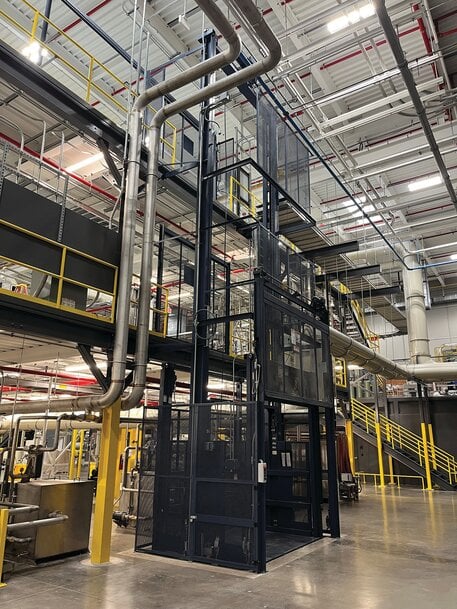
Vertical reciprocating conveyors (VRCs) provide controlled elevation changes for materials within industrial facilities. In semiconductor manufacturing, where strict operational protocols dictate material handling processes, mechanical VRC systems facilitate the vertical transport of delicate components and heavy machinery. PFlow Industries engineers specialized lifting platforms designed to integrate with automated material handling systems (AMHS) and maintain precise movement control to prevent structural or particulate damage to sensitive materials.
Mechanical Drive Systems and Precision Control
Semiconductor production requires equipment capable of operating without inducing vibration or sudden impacts that could damage silicon wafers or specialized tooling. Mechanical vertical reciprocating conveyors utilize motor-driven lifting mechanics to provide controlled acceleration and deceleration phases during operation. This mechanical control allows the lifting system to stop precisely at specified elevations, accommodating continuous operational cycles across unlimited floor levels. The systems support load capacities up to 10,000 pounds. Facility engineers adapt the structural layout to align with specific fabrication environmental constraints, minimizing manual material handling requirements and reducing the risk of material drop incidents.
High-Capacity Transport and Automation Integration
For the movement of oversized semiconductor manufacturing equipment, structural demands require higher load thresholds. Four-post mechanical lifts provide a standard load capacity of 50,000 pounds, which engineering teams can scale up to 200,000 pounds based on structural facility requirements. The four-post architecture ensures stability for frequent, heavy-duty operational cycles. The carriage design permits loading and unloading operations from all four sides, allowing integration into complex production line traffic patterns. These high-capacity systems interface with facility automation networks, ensuring the continuous transfer of large-scale equipment while adhering to strict contamination control protocols.
Infrastructure Lifecycle and Compliance Standards
VRC installations function as permanent facility infrastructure, contributing to the long-term structural layout of automated fabrication plants. The lifting systems comply with ASME B20.1 safety standards for conveyors and related equipment. Dan Hext, National Sales Director at PFlow Industries, states that industrial VRCs assist facility operators in maintaining defined throughput parameters while adhering to established industrial safety protocols. The engineering approach prioritizes continuous operational capability, utilizing mechanical components specified for high-frequency cycles and defined preventative maintenance intervals.
Additional Context: This section details technical specifications and competitive benchmarking not included in the original product announcement.
Within the industrial material handling sector, vertical reciprocating conveyors are categorized primarily into mechanical and hydraulic systems. Mechanical VRCs utilize electric motors, gearboxes, and chain or wire rope lifting mediums. This mechanical actuation provides continuous vertical travel without the height limitations inherent to hydraulic cylinder stroke lengths. Hydraulic VRCs are generally restricted to lower elevations and lower cycle rates due to fluid heating constraints during continuous operation. Mechanical systems deliver higher frequency cycling and tighter positioning tolerances, which are necessary for automated guided vehicle (AGV) or conveyor-to-conveyor material transfers in precision environments like semiconductor fabrication. Furthermore, VRCs are distinct from traditional freight elevators; they are governed by the ASME B20.1 standard rather than ASME A17.1. This classification strictly restricts VRCs to material transport, which lowers regulatory compliance complexity and installation costs while maintaining strict mechanical safety standards.
Edited by an industrial journalist, Lekshman Ramdas, with AI assistance.
www.pflow.com
-2296-71282-204124.png)