
www.magazine-industry-usa.com
17
'26
Written on Modified on
Optimizing Rubber Compounding Workflows
Struktol introduces a specialized chemical formulation designed to reduce multi-stage mixing times and lower viscosity during industrial elastomer manufacturing processes.
struktol.com
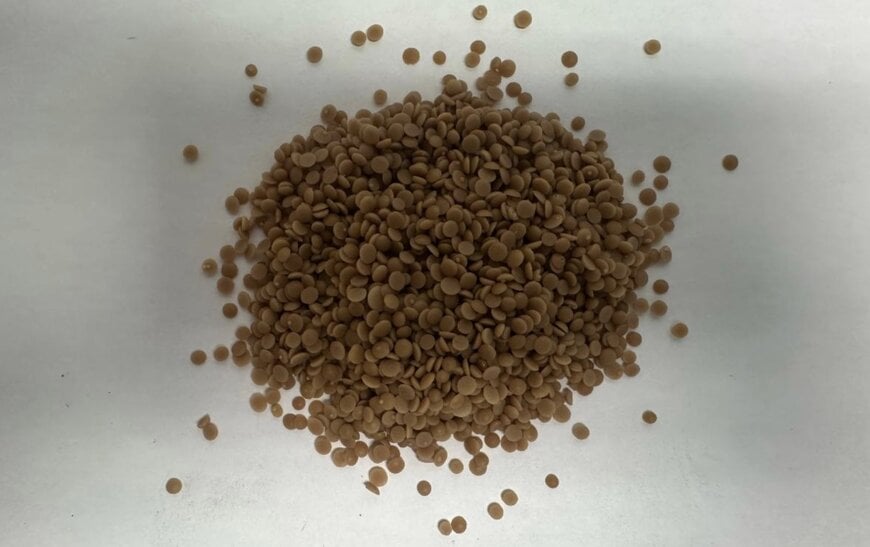
Struktol Company of America is exhibiting its new STRUKTOL FM 126 processing additive, a specialized chemical formulation developed for industrial elastomer production. This additive targets multi-stage mixing operations by accelerating the incorporation of mineral and carbon-based materials into polymer matrices.
Optimizing Polymer Processing Efficiency
The STRUKTOL FM 126 additive will be exhibited at the Global Polymer Summit 2026, scheduled for September 28 through September 30 at Booth 439 in Louisville, Kentucky. Industrial rubber manufacturing typically requires energy-intensive, multi-stage mixing to achieve proper distribution of reinforcing agents. The introduction of this processing aid addresses this bottleneck by lowering the overall compound viscosity and improving material flow. By modifying the interfacial tension between the polymer chains and the filler particles, the additive allows for more rapid incorporation and enhanced dispersion of silica, carbon black, and other mineral components.
Viscosity Reduction and Stage Consolidation
Achieving uniform compound properties often necessitates multiple passes through internal mixers. The physical alteration of the mixing mechanics provided by the FM 126 formulation enables processors to achieve required filler dispersion levels in a single pass. This reduction in the total time required per batch consolidates mixing stages and increases overall factory throughput. Maintaining physical properties while decreasing dynamic viscosity provides operators with improved surface finishes on extruded or calendered profiles across a variety of elastomer bases.
The mechanics of these efficiency gains will be outlined during a technical session on September 29 in Expo Floor, Theater 2. Mayu Si, Director of Technology-Rubber/Sales at Struktol, will detail how reducing mixing stages directly correlates to decreased labor requirements and lower energy consumption on the factory floor.
Additional Context
This section details technical specifications and competitive benchmarking not included in the original news release.
Within the elastomer additive market, processing aids are generally evaluated based on their ability to reduce Mooney viscosity and improve scorch safety without degrading the cured compound's tensile strength or modulus. Comparable industrial solutions include metallic soaps, fatty acid esters, and specialized dispersants such as the Aflux or Aktiplast lines developed by LANXESS Rhein Chemie.
While standard fatty acid derivatives primarily provide external lubrication to prevent sticking to metal rotors, advanced dispersants specifically target the reduction of filler-filler interaction, commonly referred to as the Payne effect. By mitigating the agglomeration of silica and carbon black particles, these advanced formulations yield a more homogenous masterbatch. The objective benchmark for these additives is typically measured via moving die rheometer (MDR) testing and capillary rheometry, which quantify the exact reduction in mixing energy—measured in kilowatt-hours per batch—and the corresponding shift in shear viscosity.
Edited by Aishwarya Mambet, Induportals Editor, with AI assistance.
www.struktol.com
-2296-71282-204124.png)