
Industrial Gas Control Systems Drive Application Diversity
How WITT Gas Controls advanced precision and adaptability under David Bell’s leadership.
www.wittgas.com
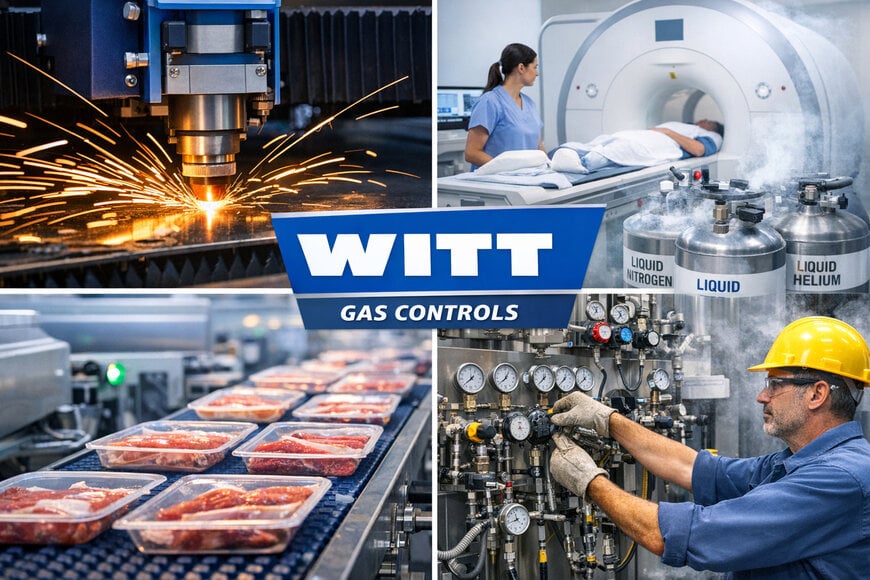
WITT Gas Controls USA, headquartered in Alpharetta, Georgia, operates in the industrial gas control and safety technology sector. The company supplies precision gas control solutions for applications ranging from metal fabrication and laser processing to medical imaging, food packaging, and laboratory research.
When David Bell founded and later led WITT Gas Controls, the industrial gas market was still largely concentrated on traditional heavy industries such as welding and shipbuilding. Over time, the sector expanded into highly regulated and technologically demanding fields, including healthcare, electronics manufacturing, and sustainable energy. This diversification introduced new technical challenges: higher purity requirements, tighter pressure control, application-specific gas mixtures, and increased expectations for system reliability and safety.
The primary goal for WITT Gas Controls was to adapt its product portfolio and organizational approach to support this expanding range of applications while maintaining consistent performance, compliance, and operational efficiency.
Technical and Organizational Solution
Rather than focusing on a single application segment, WITT Gas Controls pursued a solution strategy based on modular gas control systems, high-precision regulation, and close technical collaboration with customers. This approach enabled the company to support different gases including oxygen, nitrogen, argon, helium, and carbon dioxide across multiple industries with varying technical demands.
In laser material processing, for example, advances in CO₂ and later fiber laser technology required assist gases with defined purity levels, stable flow rates, and reproducible pressure control. WITT responded by developing gas delivery and monitoring systems capable of meeting tighter tolerances as laser cutting speeds increased and materials became thicker and more reflective.
In medical imaging and laboratory environments, particularly MRI systems, the focus shifted to ultra-high-purity gases and leak-tight control to protect cryogenic systems and ensure operational stability. Similar precision was required in food processing, where modified atmosphere packaging depends on accurate gas mixtures to extend shelf life without compromising product quality.
Reasons for Selecting This Approach
The decision to invest in adaptable, application-specific gas control solutions was driven by three main factors. First, customer processes were evolving faster than standardized gas systems could accommodate. Second, regulatory and safety requirements varied significantly across regions and industries. Third, end users increasingly expected solution providers to contribute process knowledge rather than supply components alone.
By emphasizing engineering flexibility and application understanding, WITT Gas Controls positioned itself as a technical partner rather than a commodity supplier. This was particularly relevant in sectors such as laser fabrication, where gas quality directly influences cut quality, edge oxidation, and process stability.
Deployment and Customer Support
WITT Gas Controls supported deployment through close cooperation with machine builders, gas suppliers, and end users. Systems were often configured jointly with customers to match real production conditions rather than theoretical specifications. This collaborative model reduced commissioning risks and helped align gas control performance with evolving process parameters.
As globalization reshaped the industrial gas market, the company also adapted its solutions to regional regulatory frameworks and operational practices. Experience across North America and Europe enabled knowledge transfer between markets, supporting consistent system performance despite differing standards and customer expectations.
Results and Operational Benefits
Although the source material does not provide quantified performance metrics, the outcomes of this approach can be assessed objectively:
- Improved process reliability: Precision gas control reduced variability in laser cutting, food packaging, and medical applications where gas quality is critical.
- Broader application coverage: Modular system design allowed deployment across multiple industries without redesigning core components.
- Faster adaptation to new technologies: Early engagement with emerging applications such as fiber lasers and advanced medical imaging shortened response times to market changes.
- Operational resilience: During periods of disruption, including the COVID-19 pandemic, digital systems and flexible workflows enabled continued operation with minimal interruption.
Managing Change in Technology and Organization
A key element of WITT Gas Controls’ development was the parallel evolution of technology and workforce skills. As digital tools replaced legacy systems, employees adapted to new platforms for communication, inventory management, and customer support. Cross-functional collaboration between engineering, field service, and sales ensured that technical knowledge translated into practical solutions.
According to Bell, long-term competitiveness depended less on individual products and more on the ability to respond systematically to change. This mindset supported continuous improvement as customer expectations shifted toward integrated solutions, data transparency, and responsive technical support.
Long-Term Impact
Upon David Bell’s retirement after nearly two decades leading WITT Gas Controls USA, the company had established a strong position in laser fabrication, medical imaging, and food safety applications. Its systems are now used in environments where gas purity, control accuracy, and reliability are critical to process outcomes.
The company’s current focus areas—including hydrogen technologies and sensor-based monitoring—reflect the same principles applied throughout Bell’s tenure: anticipating application trends, adapting technical solutions early, and aligning organizational structures with evolving market requirements.
www.wittgas.com
-2296-71282-204124.png)