
www.magazine-industry-usa.com
29
'26
Written on Modified on
Low Pressure Biogas Flow Measurement Technology
Engineering Precision in Low Pressure Biogas Flow Measurement with KROHNE OPTISONIC 7300 Biogas.
uk.krohne.com
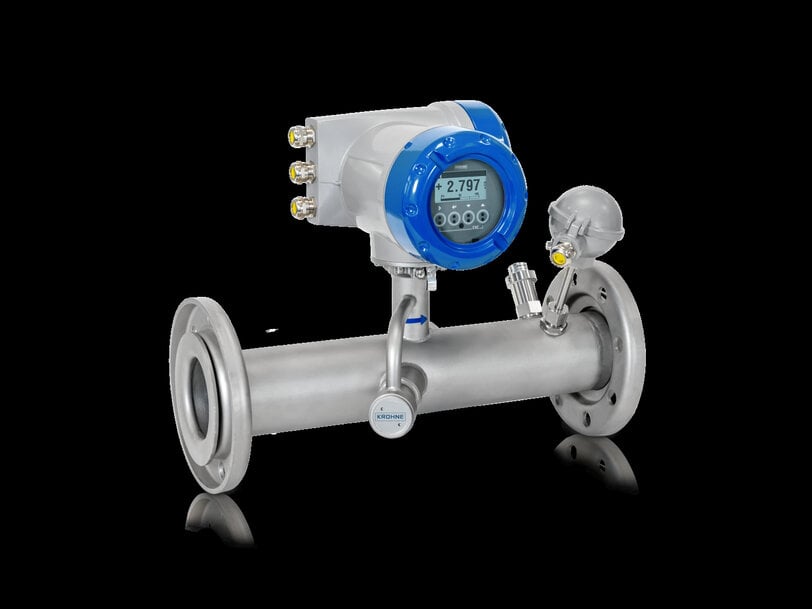
Monitoring raw biogas, landfill gas, and sewage gas presents unique engineering challenges due to variable gas compositions, low operating pressures, and high moisture content that leads to condensation in industrial pipelines. Conventional mechanical flowmeters often suffer from pressure losses, mechanical wear, and clogging caused by corrosive trace elements like hydrogen sulfide and carbon dioxide saturation. To address these operational hurdles, industrial facilities require robust, maintenance-free instrumentation capable of delivering accurate multi-parameter monitoring under saturated conditions.
Operating Principles of Ultrasonic Biogas Measurement
The KROHNE OPTISONIC 7300 Biogas flowmeter is engineered specifically for low-pressure gas applications where moisture saturation and free condensation water are prevalent. Utilizing transit-time ultrasonic measurement principles, the meter features a full-bore design with no internal moving parts or flow obstructions, eliminating permanent pressure loss and reducing maintenance overhead in continuous industrial workflows.
The device incorporates a patented transducer design equipped with corrosion-resistant titanium components that withstand aggressive media environments containing hydrogen sulfide and carbon dioxide concentrations up to 50 percent. This acoustic configuration ensures stable signal transmission even when strong acoustic dampening occurs due to moisture and suspended droplets in raw or dry biogas streams.
Multi-Parameter Monitoring and System Integration
Beyond volumetric flow measurement starting from zero with a turndown ratio of up to 100:1, the device calculates methane concentration dynamically using measured sound velocity and gas temperature. Temperature-based humidity correction algorithms allow operators to derive energy output metrics accurately. With integrated temperature sensors and optional pressure inputs, the built-in flow computer converts line conditions to standard or normal volume directly within the unit, removing the requirement for a separate auxiliary flow computer.
Bi-directional flow measurement capabilities support comprehensive monitoring across complex pipe networks in wastewater treatment plants, agricultural anaerobic digesters, and waste processing facilities. Communication protocols include HART, FOUNDATION Fieldbus, and Modbus RS485, facilitating seamless integration into distributed control systems and digital supply chain data architectures. Hazardous area compliance is supported via ATEX, IECEx, and North American Class I, Division 1 or Division 2 certifications depending on the selected configuration.
Technical Specifications
- Measuring Principle: Ultrasonic transit-time technology.
- Nominal Diameters: DN50 to DN300 (2 to 12 inches) in single-path or dual-path configurations.
- Flow Velocity Range: Up to 30 m/s (100 ft/s); bidirectional capability.
- Turndown Ratio: Up to 100:1.
- Accuracy: Flow measurement error < ±1% of measured value for standard configurations; methane content measurement error within ±2%.
- Process Conditions: Maximum operating pressure of 10 barg (145 psig); process temperature range from -40°C to +100°C (-40°F to +212°F).
- Materials of Construction: Austenitic stainless steel (316L / 1.4404) measuring tube and Grade 29 titanium wetted transducers.
- Outputs and Communication: 4-20 mA, pulse, frequency, limit switches, HART, Modbus RTU, and FOUNDATION Fieldbus.
- Hazardous Area Approvals: ATEX, IECEx, cQPSus, and NEPSI Zone 1 / Class I Div 1 compatibility.
Real-World Applications and Workflow Integration
The flowmeter integrates directly into primary and secondary gas lines within municipal wastewater treatment plants to measure sewage gas output from anaerobic digestion towers. In agricultural and industrial biomass processing facilities, it monitors raw and dry biogas generated from manure, food waste, and landfill gas extraction networks. Built-in diagnostic functions monitor sensor health and process variations continuously, while external OPTICHECK software tools enable in-line device verification and printable diagnostic documentation without process interruption.
Additional Context:
This section details technical specifications and competitive benchmarking not included in the original product announcement.
Compared to traditional thermal mass meters or mechanical rotary displacement meters, ultrasonic transit-time meters provide superior operational longevity in wet gas environments by eliminating mechanical moving parts that are susceptible to particulate jamming and condensation scaling. While differential pressure devices require restrictive orifice plates that introduce permanent pressure drops and require frequent cleaning, the full-bore architecture of ultrasonic meters maintains fluid momentum across the pipeline. Regulatory drivers demanding strict greenhouse gas reporting and optimized energy recovery from renewable sources have accelerated the adoption of multi-parameter meters that combine flow and composition analysis into a single certified enclosure.
Edited by Sucithra Mani, Induportals editor – adapted by AI.
www.krohne.com
