
www.magazine-industry-usa.com
27
'26
Written on Modified on
GXO and Agility Robotics Expand Partnership
Digit humanoid robots to expand to additional GXO sites in 2027, building on industry-first Robots-as-a-Service agreement.
www.agilityrobotics.com
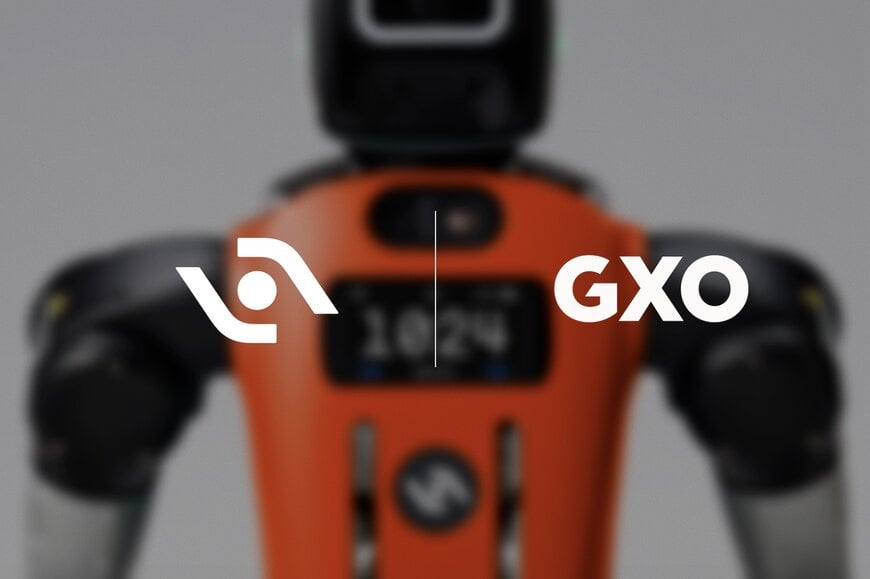
GXO Logistics and Agility Robotics have expanded their commercial deployment agreement to introduce bipedal humanoid robots across high-volume distribution centers in Statesville, North Carolina, and Lebanon, Tennessee. The initiative broadens their multi-year Robots-as-a-Service model to automate repetitive material movement and conveyor-induction workflows across active e-commerce logistics operations.
Intralogistics Constraints and Physical Automation Drivers
High-throughput fulfillment facilities encounter persistent operational bottlenecks in secondary tote transfers and repetitive loading tasks. Fixed conveyance infrastructure lacks dynamic mobility, while traditional automated guided vehicles require designated floor tracks and wide turning envelopes that can disrupt manual picking traffic. To automate intermediate transport without modifying warehouse racking or floor layouts, GXO is expanding mobile, bipedal robotic units capable of operating directly in human-centric facility aisles alongside manual material handlers.
System Architecture and Fleet Management Integration
The technical deployment utilizes Agility Robotics’ Digit platform. The bipedal robot is engineered to traverse variable floor surfaces, navigate narrow warehouse aisles, and execute multi-axis manipulation of standardized storage totes.
At the operational layer, Digit interfaces with existing warehouse execution systems and conveyor induction lines. Robotic perception pipelines continuously identify tote handles, calculate stable center-of-mass grasp coordinates, and position containers onto active belt conveyors. Fleet routing, mission scheduling, and battery charging cycles are centrally governed via Agility Arc, a cloud-based robotics management platform that tracks hardware telemetry, maps path congestion, and provisions task queues in synchronization with facility warehouse management systems.
Deployment Validation and Phased Facility Migration
The multi-site expansion builds on a proof-of-concept initiated in 2023 and a subsequent commercial Robots-as-a-Service agreement in 2024 at GXO’s Flowery Branch, Georgia facility. In that live operating environment, Digit robots have completed more than 100,000 autonomous tote transfers and contributed to over 65,000 operational hours across Agility’s commercial programs.
Deployments at the Statesville and Lebanon distribution centers are scheduled to begin in early 2027 utilizing Digit 4 units. The installations will transition to Digit 5 platforms once general commercial availability commences, supporting collaborative workflows engineered for direct operation in shared industrial workspaces. Agility Robotics supports fleet deployment and maintenance infrastructure through its 70,000-square-foot RoboFab production plant in Salem, Oregon, alongside dedicated engineering and support centers.
Operational Impact and Material Flow Stability
Scaling bipedal robotic fleets across multi-site distribution networks stabilizes induction cycle times and maintains consistent throughput across shift transitions. Automating repetitive tote repositioning eliminates ergonomic strain risks for human personnel, reduces localized bottlenecks at conveyor induction points, and validates a standardized framework for scaling physical artificial intelligence across industrial logistics networks.
Edited by Romila DSilva, Induportals Editor, with AI assistance.
www.agilityrobotics.com
