
www.magazine-industry-usa.com
16
'26
Written on Modified on
Medical IT System Insulation Monitoring for Healthcare Electrical Safety
Bender has introduced the ISOMETER isoMED527 and ISOSCAN EDS551 to improve fault localization in ungrounded medical power systems.
www.bender-uk.com
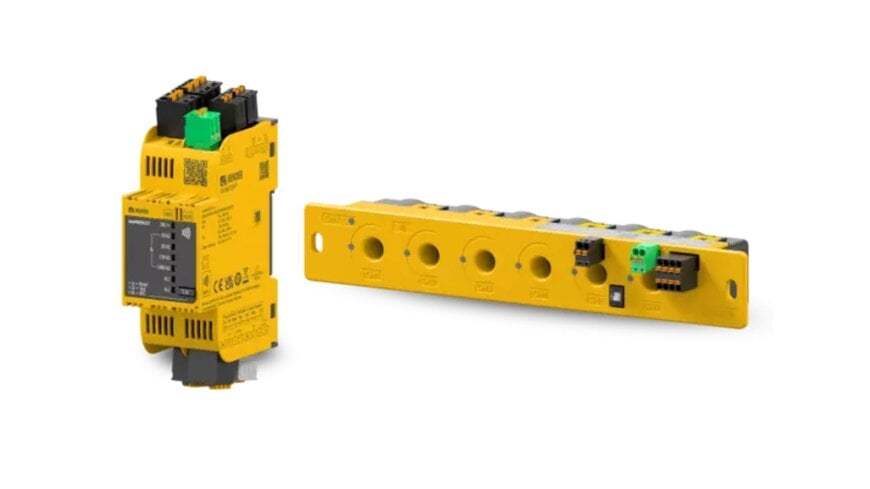
Critical medical facilities such as operating theaters and intensive care units rely on ungrounded electrical distributions to prevent unexpected circuit tripping during primary phase-to-ground faults. To enhance operational safety and simplify fault detection across these isolated power infrastructures, Bender has launched a monitoring suite comprising the ISOMETER isoMED527 insulation monitoring device and the ISOSCAN EDS551 insulation fault locator.
Engineering Challenges in Isolated Medical Power Networks
In Group 2 medical locations, standard grounded electrical topologies introduce risks of touch voltage escalation, leakage currents, and unintended circuit breaker disconnections that could disable life-support equipment. Isolated power networks—designated as medical IT systems—resolve this vulnerability by isolating live conductors from earth via medical isolation transformers. When a first insulation fault occurs between a live conductor and ground, fault current levels remain negligible, allowing medical apparatus to continue functioning without interruption.
However, continuous plant operation under a single-fault condition demands immediate technical intervention. If a secondary phase-to-ground fault develops on another conductor before the initial degradation is resolved, the system experiences a phase-to-phase short circuit that triggers overcurrent protection devices and causes widespread power outages. Furthermore, high system leakage capacitance across lengthy cable runs can distort measurement pulses, while transformer overload and thermal stresses can degrade the physical isolation barrier. Maintenance personnel require measurement mechanisms capable of evaluating insulation degradation, leakage capacitance, transformer temperature, and circuit load currents simultaneously without de-energizing operational suites.
Insulation Monitoring Architecture of the ISOMETER isoMED527
The ISOMETER isoMED527 operates as the central monitoring instrument for medical IT networks, engineered in compliance with the IEC 61557-8 product safety standard. The device connects directly between the ungrounded active conductors and earth, superimposing a low-frequency measurement signal to evaluate the insulation resistance across the galvanically isolated network.
Beyond monitoring purely resistive degradation, the unit incorporates measurement circuitry to calculate total network leakage capacitance. This capacitance monitoring ensures that system insulation diagnostics account for network size variations and parasitic capacitive paths to ground. Simultaneously, the instrument tracks physical operational parameters of the feeding medical isolation transformer, continuously acquiring load current levels and internal winding temperatures.
Configurable alarm thresholds allow facility engineers to establish staged warning limits for insulation drop, overload current, and transformer overtemperature. System alerts and parameter states are signaled locally via unit status LEDs and transmitted digitally over an integrated RS-485 serial communication bus operating on the BSC protocol.
Rapid Multi-Channel Fault Localization via the ISOSCAN EDS551
To address the practical challenge of locating which specific branch circuit or connected medical device contains the insulation fault, the ISOSCAN EDS551 works downstream alongside the primary insulation monitor. Developed according to the IEC 61557-9 standard for equipment used in insulation fault location, the instrument offers simultaneous tracking across four or six channels.
When an insulation drop is registered by the system, test current pulses are tracked through individual measuring current transformers linked to each outgoing circuit. The EDS551 acquires differential current signatures and leakage capacitance metrics per channel, pinpointing the specific degraded circuit within five seconds. This rapid localized detection eliminates manual trial-and-error disconnects within clinical suites, allowing engineering teams to isolate malfunctioning biomedical hardware immediately. Like the monitoring unit, the EDS551 displays optical diagnostic states via front LEDs and interfaces with building management systems through an RS-485 bus using the BSC communication protocol.
Clinical Integration and Operational Reliability
Deploying the combined isoMED527 and EDS551 architecture inside hospital sub-distribution panels enables clinical facilities to maintain uninterrupted electrical power while establishing proactive predictive maintenance workflows. By integrating comprehensive transformer telemetry with automated sub-second fault tracking, the installation supports uninterrupted clinical workflows and safeguards medical staff and vulnerable patients from hazardous touch currents.
Additional Context:
This section details technical specifications and competitive benchmarking not included in the original product announcement.
Standard regulatory frameworks governing healthcare electrical infrastructure, such as IEC 60364-7-710, specify that medical IT systems must initiate an alarm when insulation resistance drops below 50 kiloohms and require continuous supervision of transformer load current and temperature. While fundamental systems rely on basic audible and visual signaling panels located inside operating suites, modern installations deploy automated locating systems to satisfy stringent maintenance response requirements.
In medical isolation monitoring, benchmark systems include solutions such as the Schneider Electric Vigilohm series and the ABB ISL family. A critical engineering differentiator in modern medical fault location is the localization cycle time and channel density. The IEC 61557-9 standard defines performance benchmarks for test current generators and evaluation locators, typically requiring response times under ten seconds to prevent lingering unlocated single faults. By delivering multi-channel evaluation that resolves fault paths in less than five seconds alongside real-time network leakage capacitance measurement, the system provides faster localized diagnostics compared to older manual pulse-tracing methods.
Edited by Natania Lyngdoh, Induportals editor, with AI assistance.
www.bender.com
-2296-71282-204124.png)