
www.magazine-industry-usa.com
01
'26
Written on Modified on
Integration of high-mobility piano hinge systems
Component manufacturer norelem collaborates with industrial engineers to implement highly movable piano hinges for flush-mounted structures and complex mechanical enclosures.
norelem.se
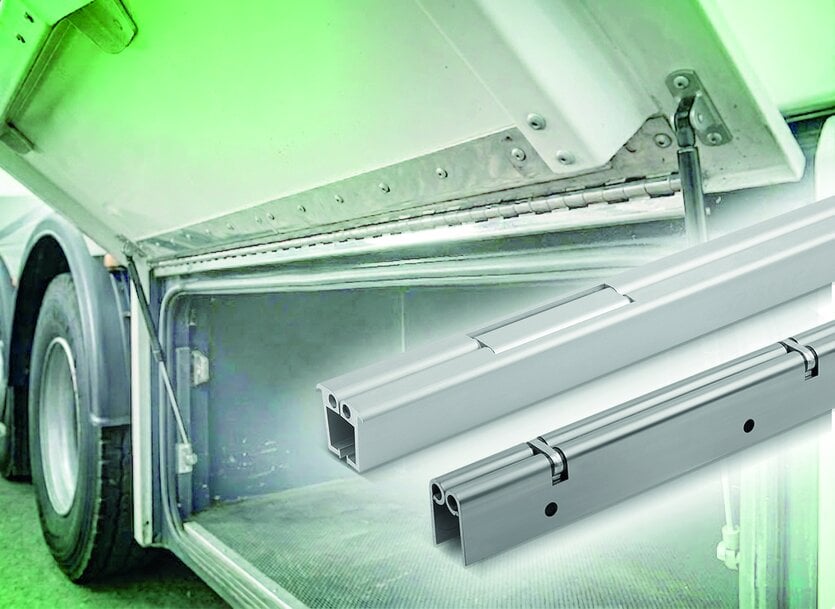
norelem and industrial manufacturing partners are collaborating to deploy advanced piano hinges equipped with gooseneck and double joint mechanisms. The technical implementation addresses the structural requirement for concealed, highly movable component connections in control cabinet manufacturing and industrial automation systems.
Operational Challenges and Collaboration
Engineers face strict spatial and structural challenges when designing enclosures where housing fronts must remain flush with the surface, or where edges, profiles, and seals obstruct the required opening path. To address these space constraints and interfering contours, industrial enclosure manufacturers collaborate with norelem. This cooperation focuses on integrating specialized hinge mechanisms that surpass standard connection capabilities, ensuring that doors, hoods, and heavy panels can be moved safely within complex installation parameters.
Technical Solution and Responsibilities
The technical architecture relies on two specific configurations detailed in the provided file image_d3232b.png: piano hinges with a gooseneck and those with an integrated double joint. norelem is responsible for engineering and manufacturing the components, while integration partners apply them to specific machinery. The double joint variant utilizes two pivot points, allowing panels to be guided past protruding contours in a controlled manner. Material options include an aluminum version for classic engineering and a corrosion-resistant stainless steel version designed to withstand continuous exposure to moisture.
Deployment and Implementation
The physical deployment of these components takes place inside the housing infrastructure, keeping the mechanisms completely concealed from outside view. During the implementation phase, integrators select between two opening angle versions based on spatial requirements. A 90-degree opening angle is installed for space-saving, right-angled access, whereas a 120-degree opening angle is deployed to facilitate broader access during hardware maintenance and service work.
Applications and Use Cases
This mechanical technology is applied directly in control cabinet construction, mechanical engineering, vehicle manufacturing, and shipbuilding. The functional use cases involve securing flush-mounted structures that require continuous protection from vandalism, dirt, and harsh weather conditions. The stainless steel configuration is specifically utilized in outdoor applications and sanitary environments where structural components are regularly sanitized with damp cloths and cleaning agents.
Results and Expected Impact
The integration of these highly movable hinges stabilizes the operational mechanics of flush fronts and complex enclosure designs. By keeping the mechanisms concealed and utilizing robust materials, the system protects internal hardware from environmental degradation and unauthorized access. This technical approach maximizes physical space efficiency and ensures the reliable movement of structural hoods, extending the maintenance lifecycle of high-quality industrial fittings.
Edited by Maria Brueva, Induportals editor – adapted by AI.
www.norelem.com
-2296-71282-204124.png)