
Perimeter protection for a 50-acre AI campus
Why hyperscale and large colocation sites need radar-led detection, thermal confirmation, and visible identification—not simply more cameras.
www.flir.com
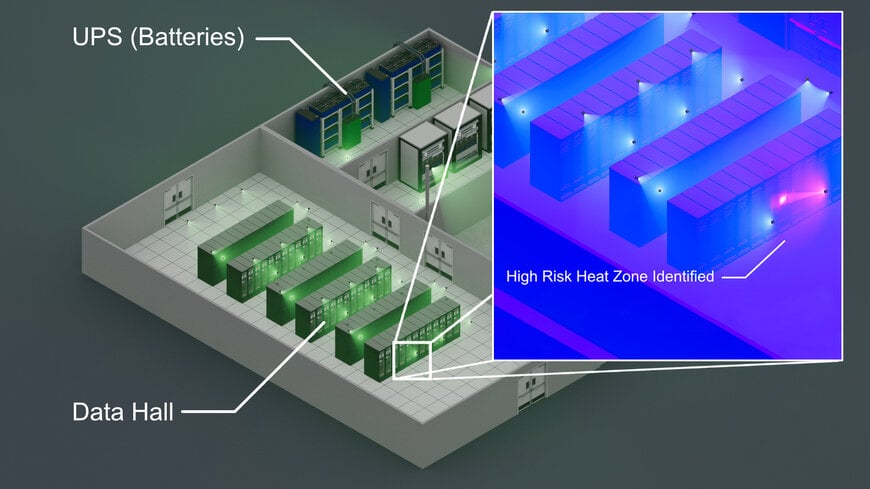
The AI buildout has reshaped the data center perimeter. The five largest US cloud and AI infrastructure providers have committed to between $660 billion and $690 billion in capital expenditure for 2026, up from roughly $380 billion in 2025, and much of that spending arrives as new and expanded sites, according to Futurum Group. A campus that once covered a few acres may now span 50 or more, with fence lines running past service roads, substations, generator yards, and open ground. Much of that boundary is poorly lit and difficult to monitor with just remote staff. Once activity at the fence moves toward power, cooling, or other critical systems, it becomes an uptime concern. That distinction matters financially. More than half of significant data center outages now cost more than $100,000, and roughly one in five exceed $1 million, according to the Uptime Institute's 2024 Annual Outage Analysis.
That scale creates practical problems for the team watching the site. There is more ground to cover, more distance between detection and response, and more routine movement from wildlife, debris, and nearby traffic. Adding cameras and alarms can leave the security operations center with more feeds and alerts, without giving operators a better understanding of what is happening. Coverage is not the same as awareness.
Start with movement, not video
Flir R-190 and R-290 ground radars can monitor long, open sections of the perimeter day or night, in changing weather conditions. They provide a target's location, direction of travel, and speed. On a site this large, knowing the direction of travel can be as important as detecting the movement itself. Someone following the outside of the fence presents a different situation from someone heading directly toward a substation or utility yard.
The radar can also cue a PTZ camera onto the target, Flir Nexus, saving the operator from searching through several views. The system begins tracking the event as soon as it is detected, giving the SOC a clearer starting point.
Radar can detect motion, but the operator still needs to know what it is and whether it matters. During the day, a visible camera may answer that quickly. Along a dark fence line, in fog, or in extreme weather, the image may be too weak to support a confident decision.
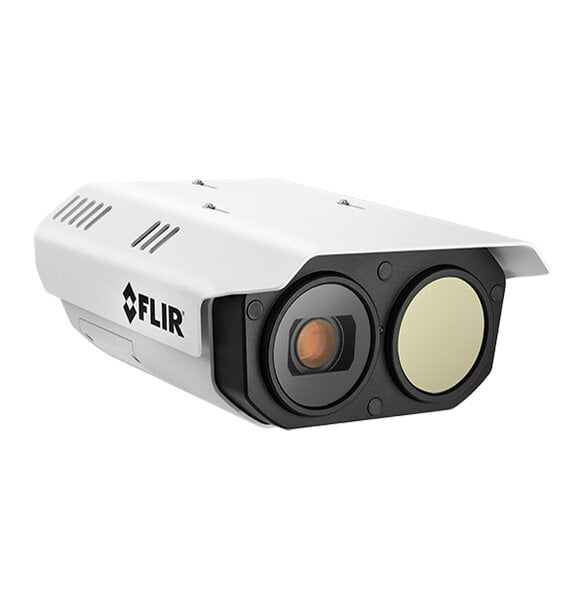
Thermal imaging keeps the target in view when the visible image falls short, allowing a person or vehicle in full darkness to be seen without any additional site lighting. Fixed multispectral cameras such as the Flir FH-Series provide thermal and visible coverage from the same position.
A multispectral PTZ camera such as the Flir PT-Series AI SR can follow a radar track, hold the target in thermal, and pull in a visible view when identification matters. Radar shows where the movement is, thermal helps confirm the target in poor conditions, and visible imaging gives the operator the detail needed to judge what is happening.
Make the alarm worth looking at
A perimeter of this size generates continuous nuisance activity, with wildlife, moving vegetation, traffic on adjacent roads, and authorized personnel working near restricted areas. When those events reach the SOC as undifferentiated alarms, operators spend a disproportionate share of each shift clearing non-actionable events, and genuine intrusions become harder to distinguish from routine ones. The result is unnecessary dispatch cost, guard fatigue, and declining operator confidence in the alarm queue.
Validation at the edge helps reduce that noise. Edge analytics can classify human and vehicle movement before the event reaches the control room. Radar provides location and direction, while thermal and visible imagery help confirm what the sensor is seeing. By the time the alert reaches the operator, it can include the target type, location, direction of travel, and associated video.
Where that work happens also affects cost. Radar-only and visible-only designs often send raw data back to central servers for processing, which adds compute, licensing, and network load as a campus grows. Handling more of it at the sensor keeps that overhead steadier.
None of this requires replacing what a site already runs. Most campuses have capable video and access control in place, and these layers are intended to work alongside them. Flir Nexus® can carry target information between connected systems as the event moves across the site, so a detection at the fence can flow into interior validation and the response workflow without the operator having to re-establish it. Flir Latitude VMS or Cameleon command-and-control software then gives the operator a common view. The operator still decides what happens next, but no longer has to build the story from disconnected alarms and camera feeds.
Design for the site that is actually there
The right mix will change from one part of the property to another. An open stretch may need radar coverage, while a gate, blind corner, or utility yard may call for fixed thermal and visible cameras with a PTZ nearby. Terrain, fence layout, vegetation, roads, and the location of critical equipment all affect the design.
Flir Raven site planning software allows those layers to be modeled before installation. Planners can see where coverage overlaps, where gaps remain, and where each technology is most useful. That work is far easier at the design stage than after the fact, since building layered validation into fifty acres costs less than retrofitting it once the fence line is already in the ground.
The better question is what the operator needs to know at each stretch of the boundary. Across open ground, the priority may be early detection and tracking. Along a dark run, thermal confirmation may matter more. Near a gate or critical asset, visible detail may be what helps the operator make the call.
Regional considerations
The argument carries different weight by market. In the EU, the Energy Efficiency Directive requires data centers with an installed IT power demand of at least 500 kW to report annual energy performance, and planning rules in Germany and Ireland continue to tighten. In that context, a detection layer that operates without adding perimeter lighting supports both efficiency and security cases. UK projects face similar grid-connection scrutiny. In the US, the same capability is often framed as grid resilience, since the perimeter now extends beyond the power infrastructure the site depends on.
On a campus this large, the goal is not to send more video back to the SOC. It is to give the operator a clear read on where something is moving, what it is, and whether it is headed somewhere that matters. Radar, thermal, and visible cameras each contribute part of that answer, giving the team more time to respond before activity at the fence reaches critical infrastructure.
-2296-71282-204124.png)