
www.magazine-industry-usa.com
19
'26
Written on Modified on
High-Temperature Thermocouples Reduce Steel Plant Downtime
WIKA’s TC80 high-temperature thermocouples have operated for nearly five years in a Chinese steel plant without reported failures.
www.wika.com
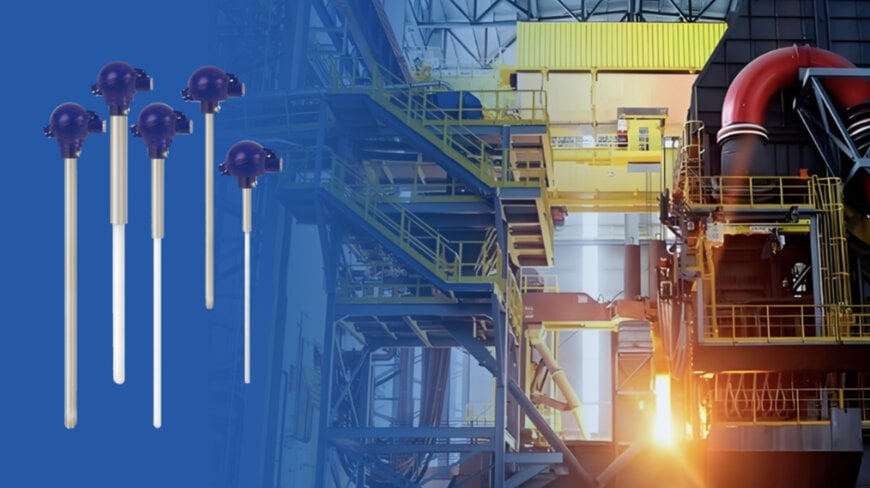
WIKA’s TC80 high-temperature thermocouples have been used in critical temperature monitoring applications at a major Chinese steel producer for nearly five years, supporting continuous blast furnace operations under temperatures reaching 1,500°C. The deployment addresses persistent challenges in steel manufacturing, where sensor reliability directly affects production continuity, maintenance costs and operational safety.
Extreme-temperature measurement remains critical for blast furnace efficiency
In steel production, hot blast stoves provide continuous heated air to blast furnaces and require stable temperature control to maintain operational efficiency. Temperature monitoring at the dome and hot blast main pipeline is particularly challenging because these zones operate continuously at temperatures between 1,200°C and 1,500°C.
Frequent thermocouple replacement in such environments often requires hot blast interruptions, resulting in production losses and exposing maintenance personnel to elevated safety risks. The need for reliable high-temperature measurement systems has therefore become increasingly important in reducing unplanned downtime in steel manufacturing.
TC80 thermocouples designed for prolonged operation in high-temperature environments
To address these operating conditions, WIKA implemented its TC80 high-temperature thermocouple as a dedicated measurement solution for the steel producer’s blast furnace applications.
Installed at the hot blast stove dome and hot blast main pipeline, the TC80 continuously monitors temperature fluctuations under sustained thermal loads. According to WIKA, several design characteristics contribute to performance in extreme industrial environments:
The thermocouple incorporates a high-density silicon carbide (SiC) protection tube engineered for thermal stability, resistance to thermal shock and protection against mechanical erosion. The material maintains structural integrity at temperatures up to 1,600°C while reducing deformation caused by thermal stress.
The sensing wire diameter is controlled at 0.5 mm according to industry standards, balancing measurement sensitivity with mechanical durability to reduce risks associated with wire failure.
The device is rated for temperatures up to 1,600°C, enabling deployment in blast furnace environments without additional protective systems.
Long-term reliability reduces maintenance and operational interruptions
According to the steel producer’s equipment management team, the installed TC80 thermocouples have operated for nearly five years without reported failures, reducing the need for recurring replacements associated with conventional thermocouples.
Extended service life in high-temperature applications can lower spare part consumption, reduce maintenance labour requirements and minimise planned shutdowns.
The reported elimination of thermocouple-related hot blast interruptions has also contributed to uninterrupted blast furnace operations, helping avoid productivity losses associated with unexpected downtime.
Reduced maintenance interventions in high-temperature environments additionally lower personnel exposure to hazardous working conditions.
High-temperature sensing supports broader industrial process optimisation
Reliable temperature measurement remains a key factor in process industries including steelmaking, where deviations in thermal control can affect energy efficiency, equipment lifespan and production stability.
By extending operational lifespan under sustained temperatures exceeding 1,200°C, high-temperature thermocouples may support broader industrial goals related to maintenance optimisation and production continuity.
Edited by Natania Lyngdoh, Induportals Editor, with AI assistance.
www.wika.com
-2296-71282-204124.png)