
www.magazine-industry-usa.com
29
'26
Written on Modified on
Greenwater Pilot Demonstrates Bacterial Reduction in River
Field deployment of ozone-based treatment in a transboundary river achieved measurable microbial reduction, informing scaled water treatment strategies for U.S. restoration projects.
www.greenwaterservices.com
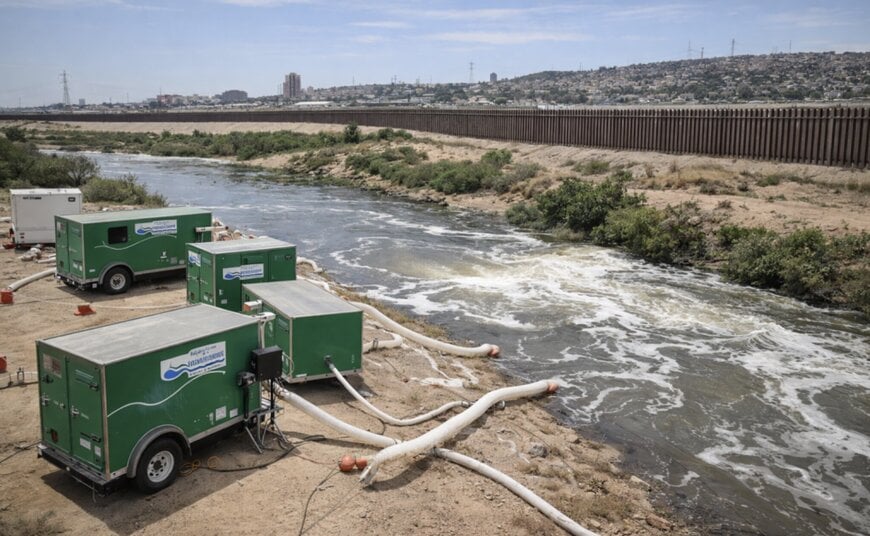
Reducing microbial contamination in heavily polluted waterways remains a persistent challenge for environmental engineering and public health systems. In this context, Greenwater Services completed a five-week pilot deployment of its Nano Bubble Ozone Technology (NBOT) in the Tijuana River, reporting an average 91.5% reduction in total coliform bacteria during treatment periods.
Pilot conditions reflect complex transboundary water system
The pilot was conducted along the flood control plain west of the U.S.–Mexico border under the oversight of the International Boundary and Water Commission, with project funding of $1.1 million. The Tijuana River flows north into San Diego County before discharging into the Pacific Ocean near Imperial Beach, and has been subject to long-term contamination from untreated wastewater, stormwater runoff, and industrial discharge.
The trial was designed to evaluate localized treatment performance rather than full watershed remediation, focusing on a defined river section under variable flow and contamination conditions.
Nano-scale ozone delivery targets bacteria without atmospheric release
The NBOT system operates by infusing water with nano-sized ozone bubbles that interact with bacteria and dissolved contaminants within the water column. This approach enables disinfection while limiting ozone release into the atmosphere and avoiding direct harm to marine ecosystems.
The treatment process also increases dissolved oxygen levels following disinfection, based on assessments conducted with input from researchers including those affiliated with the National Oceanic and Atmospheric Administration. Validation studies have also been carried out in collaboration with Ohio State University.
Field constraints and operational performance
During the pilot, four NBOT units were deployed. Operational constraints included significant volumes of plastic waste and debris in the river, which required limiting treatment primarily to daylight hours when flow conditions reduced clogging risks.
Despite these limitations, the system exceeded initial performance targets of 15–20% bacterial reduction, achieving an average reduction of 91.5% on active treatment days. Observations from personnel in the vicinity also indicated a reduction in odor levels during operation, suggesting concurrent mitigation of organic contamination.
However, measured bacterial levels remained above thresholds for direct human contact, reflecting the scale of contamination and the localized scope of the pilot.
Scaling requirements for compliance-level treatment
Based on flow rate estimates for the river, approximately 40 NBOT units, combined with continuous 24/7 operation and integrated pre-filtration systems, would be required to achieve compliance-level water quality improvements across larger sections of the river.
Following the pilot, Greenwater Services submitted a technical report to the IBWC outlining recommendations for scaled deployment, including debris filtration integration and continuous operation strategies.
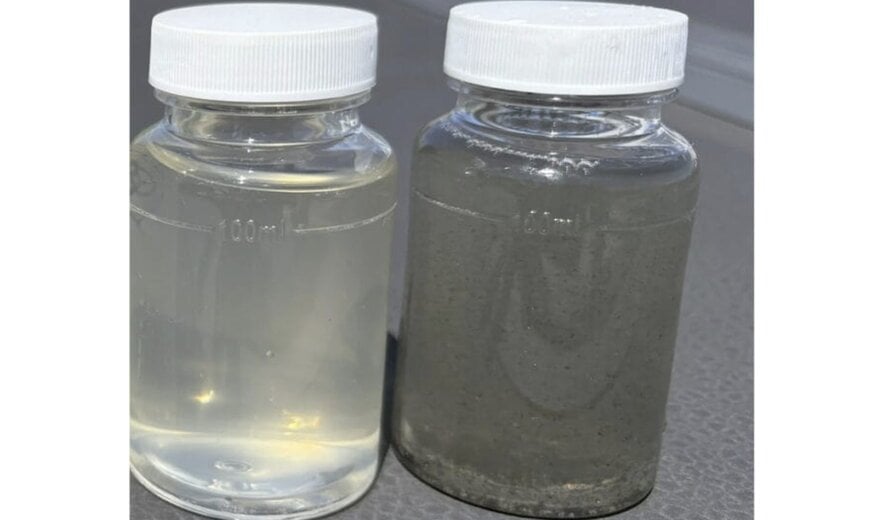
Before and After Treatment Samples: Tijuana River, Mexico.
Expansion toward nutrient reduction and lake restoration
The pilot results are informing additional water restoration projects across the United States, particularly in nutrient management and ecosystem recovery. Planned initiatives include collaboration with the National Oceanic and Atmospheric Administration and the Florida Department of Environmental Protection on projects targeting phosphorus and nitrogen reduction in Florida lakes.
Further projects involve partnerships with Ohio State University and the University of Florida, focusing on nutrient load reduction and aquatic ecosystem restoration.
From pilot validation to broader deployment
The Tijuana River pilot demonstrates the measurable impact of localized ozone-based treatment under complex environmental conditions. The next phase focuses on scaling the approach through continuous operation, integrated filtration, and multi-unit deployment, aligning with broader water treatment and environmental remediation strategies across the United States.
Edited by Aishwarya Mambet, Induportals Editor, with AI assistance.
www.greenwaterservices.com
-2296-71282-204124.png)