
www.magazine-industry-usa.com
21
'26
Written on Modified on
Jungheinrich accelerates battery development using Monolith AI models
Predictive engineering software enables early battery performance evaluation, reducing physical testing and supporting faster development of electric industrial trucks.
www.jungheinrich.co.uk
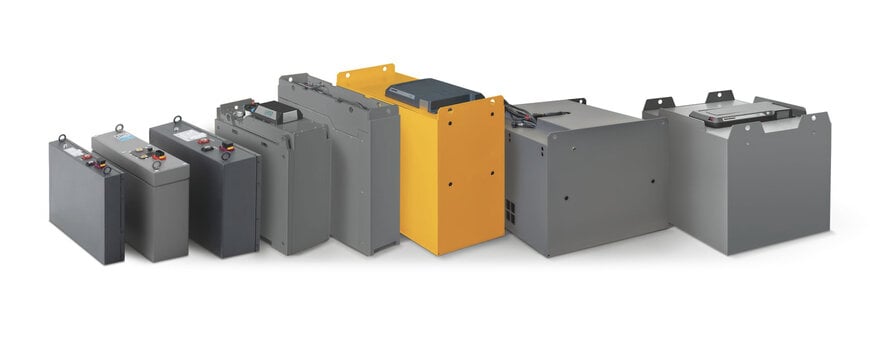
Industrial vehicles, electrification, and battery engineering are increasingly shaped by data-driven development approaches. In this context, Jungheinrich AG is collaborating with Monolith AI to integrate predictive AI models into battery development processes for electric industrial trucks.
The initiative focuses on using machine learning to analyse early-stage battery test data, enabling engineers to predict key performance metrics before extensive physical validation is completed. This approach addresses the growing complexity of battery integration as new chemistries and performance requirements emerge.
Predictive modelling from early test data
Battery development traditionally relies on iterative testing cycles, generating large volumes of measurement data across different development stages. In this collaboration, Jungheinrich transfers these datasets into Monolith’s AI-powered engineering platform, where machine learning models are trained and validated using real-world test results.
This enables:
- Early performance prediction: Estimation of key indicators such as efficiency, durability, and behaviour under load conditions
- Faster technical validation: Earlier confirmation of design decisions based on data-driven insights
- Reduced testing scope: Minimisation of physical test campaigns through validated predictive models
By shifting analysis to earlier stages, the approach supports more efficient development workflows and reduces dependency on late-stage testing.
AI-supported engineering for reduced development time
As battery technologies evolve rapidly, manufacturers face increasing pressure to shorten development cycles while maintaining reliability and performance. AI-based modelling provides a way to accelerate research and development processes by identifying trends and correlations within complex datasets.
According to industry research, data-driven AI approaches can reduce R&D timelines by 20% to 80% in complex manufacturing environments. In this context, predictive modelling helps engineers prioritise critical experiments and focus on high-impact design improvements.
Centralised engineering intelligence platform
The collaboration also introduces a centralised platform for managing engineering data and insights. This environment enables teams to access:
AI-supported engineering for reduced development time
As battery technologies evolve rapidly, manufacturers face increasing pressure to shorten development cycles while maintaining reliability and performance. AI-based modelling provides a way to accelerate research and development processes by identifying trends and correlations within complex datasets.
According to industry research, data-driven AI approaches can reduce R&D timelines by 20% to 80% in complex manufacturing environments. In this context, predictive modelling helps engineers prioritise critical experiments and focus on high-impact design improvements.
Centralised engineering intelligence platform
The collaboration also introduces a centralised platform for managing engineering data and insights. This environment enables teams to access:
- Historical test datasets across development programmes
- Validated predictive models and performance insights
- Recommendations for future testing and design iterations
Such integration supports knowledge reuse and consistency across projects, improving decision-making throughout the development lifecycle.
Applications in electric industrial vehicles
The use of predictive AI models is particularly relevant for electric industrial trucks, where battery performance directly influences vehicle range, charging behaviour, and operational efficiency. By improving the evaluation and selection of battery technologies, Jungheinrich aims to enhance the performance and sustainability of its expanding electric product portfolio.
Compared to conventional development methods, which rely heavily on sequential testing, AI-supported approaches enable parallel evaluation of multiple design scenarios. This contributes to faster time-to-market and more efficient use of engineering resources.
The collaboration between Jungheinrich and Monolith reflects a broader trend in industrial engineering, where data-driven tools are increasingly integrated into product development processes to address complexity, reduce costs, and improve performance outcomes.
Edited by Natania Lyngdoh, Induportals Editor — Adapted by AI.
www.jungheinrich.com
Applications in electric industrial vehicles
The use of predictive AI models is particularly relevant for electric industrial trucks, where battery performance directly influences vehicle range, charging behaviour, and operational efficiency. By improving the evaluation and selection of battery technologies, Jungheinrich aims to enhance the performance and sustainability of its expanding electric product portfolio.
Compared to conventional development methods, which rely heavily on sequential testing, AI-supported approaches enable parallel evaluation of multiple design scenarios. This contributes to faster time-to-market and more efficient use of engineering resources.
The collaboration between Jungheinrich and Monolith reflects a broader trend in industrial engineering, where data-driven tools are increasingly integrated into product development processes to address complexity, reduce costs, and improve performance outcomes.
Edited by Natania Lyngdoh, Induportals Editor — Adapted by AI.
www.jungheinrich.com
-2296-71282-204124.png)