
Heat Pumps Drive HVAC Electrification Shift
An exclusive interview with Matt Bynum, Mitsubishi Electric Trane HVAC US, on regulatory, technological, and digital trends shaping all-electric HVAC adoption in the U.S.
www.mitsubishielectric.com
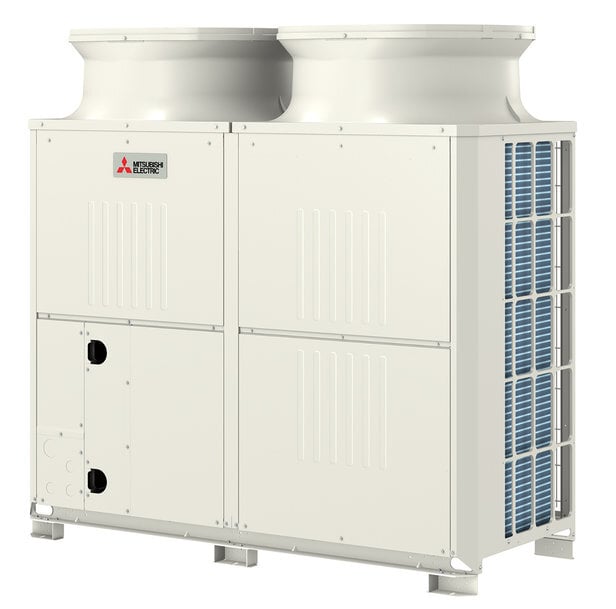
The transition toward all-electric HVAC systems in the United States is accelerating, driven by regulatory changes, utility incentives, and advances in heat pump performance. Mitsubishi Electric Trane HVAC US (METUS) presented solutions at AHR Expo 2026 addressing electrification, low-GWP refrigerants, and digital system integration.
Regulation and incentives accelerate electrification
Market momentum toward electrification is supported by policy frameworks and financial incentives. State-level regulations, such as building electrification mandates in New York, are phasing out fossil-fuel-based heating in new construction.
Utility-led incentive programs are also influencing adoption. For example, rebate schemes can cover a significant portion of equipment costs for high-efficiency upgrades, improving the economic feasibility of transitioning to electric HVAC systems.
These measures, combined with improvements in heat pump efficiency, are contributing to a structural shift toward electric heating technologies.
Heat pump systems replace fossil-fuel heating
The transition away from conventional boilers is particularly evident in commercial and light-industrial applications. Air-to-water (ATW) heat pump systems are increasingly used for space heating and hot water generation.
METUS presented systems designed to meet these requirements, including modular air-source heat pump solutions capable of delivering high outlet water temperatures suitable for applications such as multi-family housing, healthcare facilities, and industrial processes.
In parallel, modular air-cooled chiller systems are being developed to provide flexible cooling without the need for cooling towers, simplifying installation and reducing infrastructure requirements. The modular air-cooled “e-Chiller” system is expected to be introduced later in 2026, with a likely market launch in Q4 2026.
Low-GWP refrigerants reshape system design
The adoption of low-global-warming-potential (GWP) refrigerants is another key driver of HVAC system evolution. Regulatory frameworks such as the American Innovation and Manufacturing (AIM) Act are accelerating the phase-down of high-GWP refrigerants.
As of 2026, A2L refrigerants such as R-32 have become standard in variable refrigerant flow (VRF) systems. These refrigerants offer a balance between energy efficiency and reduced environmental impact, influencing the design of next-generation HVAC equipment.
All-climate performance expands application range
Advances in compressor technology, variable-speed drives, and refrigerant design have improved heat pump performance in low-temperature conditions. Modern systems are capable of maintaining efficiency and output in colder climates, expanding their applicability across diverse U.S. regions.
This development is critical for broader adoption, as it enables electrification strategies in areas previously dependent on fossil-fuel heating.
Digital integration enables system optimisation
Smart controls and cloud-based platforms are increasingly integrated into HVAC systems, supporting remote monitoring, predictive maintenance, and energy optimisation.
Centralised control interfaces and connected applications allow building operators to manage multiple indoor units, adjust system parameters, and diagnose faults remotely. This improves operational efficiency while reducing maintenance response times.
Retrofit considerations for facility managers
When transitioning to electric HVAC systems, facility managers must assess electrical infrastructure capacity and compatibility with heat pump technologies. Lifecycle cost analysis, including energy savings and maintenance requirements, is a key factor in decision-making.
In addition, alignment with sustainability targets and access to financial incentives influence retrofit strategies.
Outlook: Electrification as a defining trend
The shift toward all-electric heat pump systems is expected to have the greatest impact on commercial building design and energy consumption. These systems support decarbonisation objectives while offering flexible design and operational efficiency.
As regulatory pressure and market demand continue to evolve, scalable electric HVAC solutions are likely to play a central role in future building infrastructure.
Edited by an industrial journalist, Lekshman Ramdas, with AI assistance.
www.mitsubishicomfort.com
-2296-71282-204124.png)