
www.magazine-industry-usa.com
04
'26
Written on Modified on
Environmental Testing Expands Reliability of Motion Control Components
Servotecnica internalises qualification of slip rings for extreme temperatures and humidity conditions to support faster development for harsh industrial applications.
us.servotecnica.com
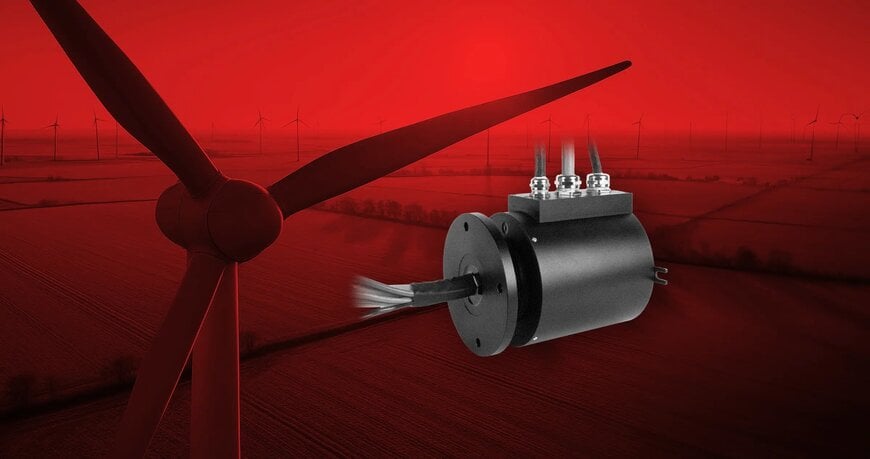
Environmental resistance remains a critical factor in the design of motion control systems used in sectors such as renewable energy, heavy industry, robotics, and aerospace. Components such as slip rings must maintain electrical continuity and mechanical stability despite exposure to temperature variation, humidity, and mechanical stress.
To address these constraints, Servotecnica has established internal environmental testing capabilities to accelerate the validation of custom slip rings designed for harsh operating conditions.
Simulating temperature extremes and climate exposure
The internal testing infrastructure allows qualification of slip ring designs across a temperature range from –50 °C to +180 °C, covering operating scenarios such as high-altitude installations, outdoor renewable energy systems, and high-temperature industrial processes.
Environmental simulation also includes humidity control between 10 % and 98 % relative humidity, enabling detection of risks such as internal condensation, oxidation, and insulation degradation that may affect long-term performance.
Thermal shock testing is also performed to evaluate resistance to rapid temperature transitions, including cold starts and sudden temperature increases. These tests help verify that mechanical tolerances and electrical contact performance remain stable under rapid expansion and contraction cycles.
Such qualification procedures are particularly relevant for motion control components used in wind turbines, robotics operating near heat sources, and other applications where environmental variability directly affects reliability.
Faster design validation through internal testing capabilities
Bringing environmental qualification in-house changes the development workflow for customised slip rings. Instead of relying on external testing laboratories, design modifications can be validated immediately following test results.
If a material or sealing solution shows performance limits during low-temperature testing, alternative configurations can be evaluated without the delays associated with external scheduling. This approach reduces development cycles for application-specific designs and allows testing conditions to be aligned more closely with actual operating environments.
Testing can also include evaluation of cable assemblies, sealing solutions, and lubricant behaviour under temperature stress to ensure consistent electrical transmission performance in demanding conditions related to power transmission and rotating systems.
Supporting application-specific slip ring development
Environmental qualification is often the determining factor in slip ring selection, particularly for applications such as subsea robotics, desert monitoring systems, or high-temperature industrial automation.
Earlier validation of environmental resistance allows design adjustments before deployment, helping reduce uncertainty in component performance under extreme operating conditions. This approach reflects a broader industry shift toward earlier reliability testing in the development of electromechanical components used in demanding automation and energy applications.
To address these constraints, Servotecnica has established internal environmental testing capabilities to accelerate the validation of custom slip rings designed for harsh operating conditions.
Simulating temperature extremes and climate exposure
The internal testing infrastructure allows qualification of slip ring designs across a temperature range from –50 °C to +180 °C, covering operating scenarios such as high-altitude installations, outdoor renewable energy systems, and high-temperature industrial processes.
Environmental simulation also includes humidity control between 10 % and 98 % relative humidity, enabling detection of risks such as internal condensation, oxidation, and insulation degradation that may affect long-term performance.
Thermal shock testing is also performed to evaluate resistance to rapid temperature transitions, including cold starts and sudden temperature increases. These tests help verify that mechanical tolerances and electrical contact performance remain stable under rapid expansion and contraction cycles.
Such qualification procedures are particularly relevant for motion control components used in wind turbines, robotics operating near heat sources, and other applications where environmental variability directly affects reliability.
Faster design validation through internal testing capabilities
Bringing environmental qualification in-house changes the development workflow for customised slip rings. Instead of relying on external testing laboratories, design modifications can be validated immediately following test results.
If a material or sealing solution shows performance limits during low-temperature testing, alternative configurations can be evaluated without the delays associated with external scheduling. This approach reduces development cycles for application-specific designs and allows testing conditions to be aligned more closely with actual operating environments.
Testing can also include evaluation of cable assemblies, sealing solutions, and lubricant behaviour under temperature stress to ensure consistent electrical transmission performance in demanding conditions related to power transmission and rotating systems.
Supporting application-specific slip ring development
Environmental qualification is often the determining factor in slip ring selection, particularly for applications such as subsea robotics, desert monitoring systems, or high-temperature industrial automation.
Earlier validation of environmental resistance allows design adjustments before deployment, helping reduce uncertainty in component performance under extreme operating conditions. This approach reflects a broader industry shift toward earlier reliability testing in the development of electromechanical components used in demanding automation and energy applications.
-2296-71282-204124.png)