
www.magazine-industry-usa.com
09
'25
Written on Modified on
Sete Lagoas Engine Manufacturing Marks 25 Years of Output at FPT
The Brazilian plant underpins engine supply for transport, off-highway machinery, and power generation while advancing biofuel development aligned with regional decarbonization goals.
www.fptindustrial.com
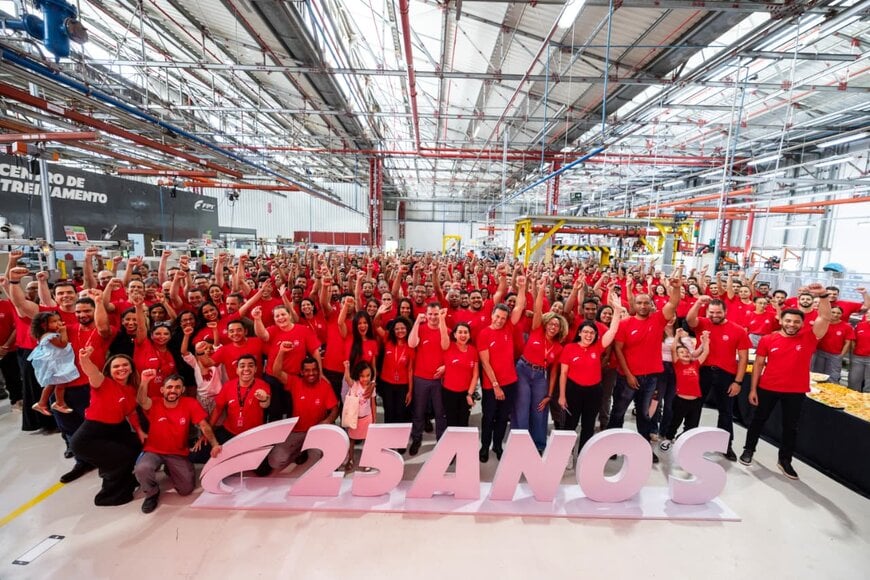
For a quarter century, the Sete Lagoas facility in Minas Gerais has been a core engine manufacturing site for Latin America, supplying multiple mobility and energy applications. The milestone marked 25 years since the plant’s inauguration and cumulative production of 725,000 engines, with FPT Industrial confirming the anniversary of its Brazilian operations.
A manufacturing base spanning transport, off-road, and power generation
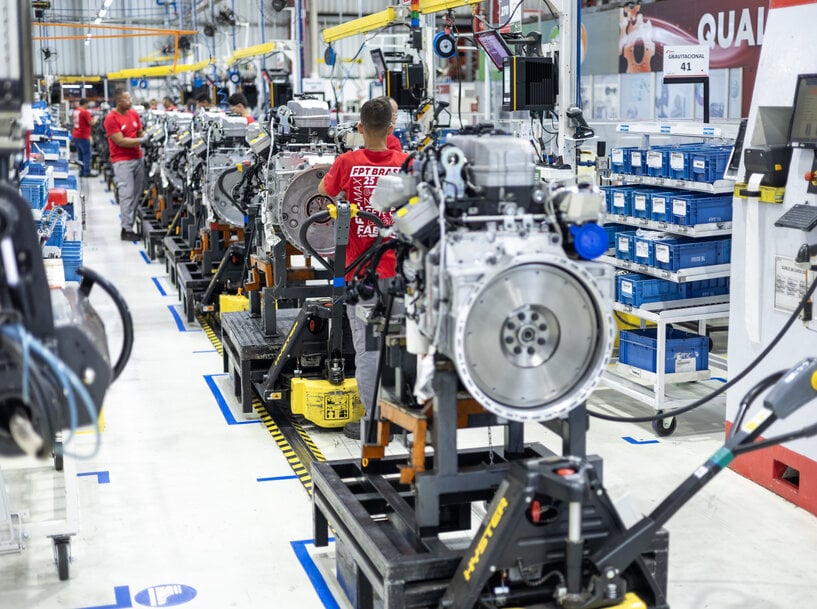
Since November 25, 2000, the Sete Lagoas plant has produced engines for on-road vehicles, agricultural and construction machinery, and stationary power generation. Output has included engines from the F1, NEF Series, and S8000 families, as well as G-Drive units used in generator sets. These platforms supported commercial vehicles, buses, off-highway equipment, and distributed power systems across Latin America.
Continuous process evolution and production scale
The site covered 68,372 m² and employed 250 people, operating dedicated production lines designed for multi-segment output. Over time, manufacturing methods were updated to improve quality control, safety, and repeatability, enabling the transition from early product generations to current engine architectures. This long-term process evolution supported consistent volumes while meeting varying technical requirements across customer industries.
Biofuel development as part of regional decarbonization
Beyond conventional diesel platforms, the Sete Lagoas operation led regional development of engines compatible with ethanol, natural gas, and biomethane. These fuel pathways aligned with Latin American decarbonization strategies by reducing lifecycle emissions where local fuel infrastructure was available. The work complemented broader energy-transition efforts in mobility and distributed power, particularly for fleets and agricultural operations seeking lower-carbon alternatives.
Customer coverage across multiple industries
Engines produced at Sete Lagoas supplied OEMs and system integrators in transport, agriculture, construction, and power generation. Customers included vehicle manufacturers, agricultural equipment builders, and generator set producers, reflecting the plant’s role in a diversified industrial supply base rather than a single end market. This breadth reduced dependence on one sector and supported stable utilization over time.
Workforce development and technical training
Alongside production, the plant supported workforce development through a technical training initiative run with the Sete Lagoas Municipal Technical School. Since 2024, the program involved more than 100 participants, focusing on practical manufacturing skills and engineering fundamentals relevant to engine production and industrial operations.
Measured sustainability actions on the shop floor
Operational sustainability initiatives included the replacement of wooden packaging with reusable metal structures in 2024. This change prevented the disposal of 16 tonnes of wood, reduced associated emissions, and supported circular-economy practices within logistics and materials handling.
Role within Brazil’s industrial network
Within Brazil, approximately 40% of FPT’s locally produced units supplied the Iveco Group, with the remaining 60% delivered to third-party customers. Distribution and after-sales support were provided through a national network of around 150 distributors and service points, enabling localized maintenance and lifecycle support for engines deployed across the country.
After 25 years of operation, the Sete Lagoas plant remained positioned as a manufacturing and development hub supporting engine supply, alternative fuels, and industrial skills development in Latin America, reflecting its long-term role in the region’s mobility and energy landscape.
-2296-71282-204124.png)