
www.magazine-industry-usa.com
04
'26
Written on Modified on
Modeling Water and Energy Demands for Sustainable Data Centers in Texas
Tetra Tech's analysis utilizes physics-based simulation to quantify the resource trade-offs between water and power consumption for data center cooling.
www.tetratech.com
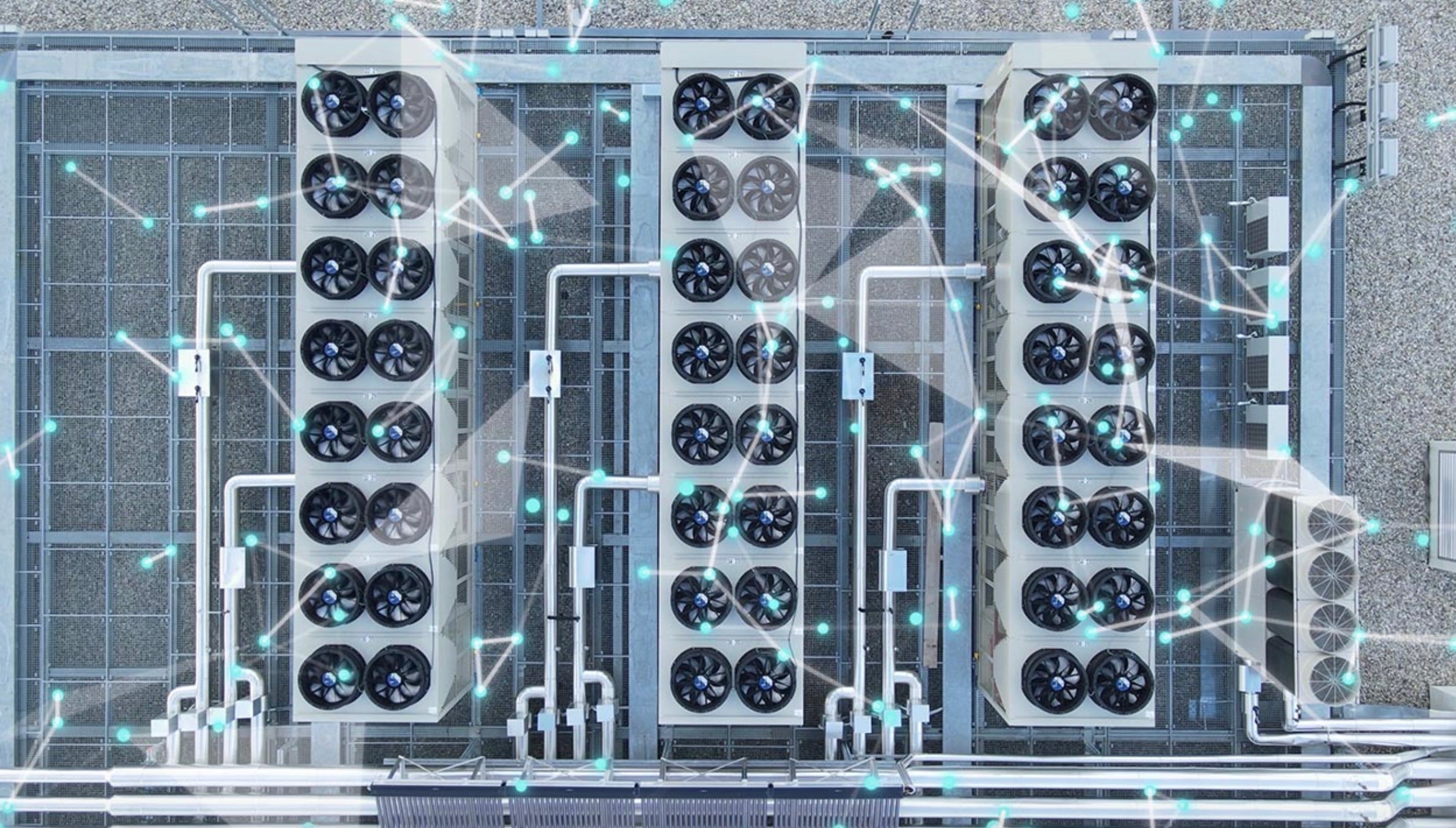
Tetra Tech has released a white paper titled Sustainable Data Centers: Modeling Water and Power Demands for Cooling, which examines infrastructure demands driven by the expansion of artificial intelligence (AI) and hyperscale data centers in Texas. The study focuses on how advanced energy modeling can quantify the varying resource requirements for cooling facilities across different regional climates.
Rising Infrastructure Demands
In 2023, data centers represented approximately 4.4% of total U.S. electricity consumption, a figure projected to exceed 10% by 2030. In Texas, the rapid growth of data center capacity is expected to increase energy demand, which subsequently drives additional water use both on-site and at the facilities responsible for power generation.
Resource Trade-offs in Cooling Systems
Many facilities utilize evaporative cooling systems that require significant volumes of water. While reducing on-site water use is possible, it often necessitates greater energy input for mechanical cooling. This creates a trade-off where shifted energy demands lead to increased water consumption at the point of power generation.
Hourly Physics-Based Modeling
Tetra Tech’s study employs physics-based building simulation to model consumption on an hourly basis, moving beyond traditional annual averages. This detailed analysis evaluated theoretical sites in Houston and El Paso to represent the diverse range of Texas climates. The results demonstrate that water and power demands vary significantly based on:
- Climate Conditions: Local temperature and humidity levels.
- IT Equipment Design: The specific configuration of computing hardware.
- Cooling Technology: The mechanical system chosen for thermal management.
Sustainable Infrastructure Planning
Integrated planning that accounts for both water and energy is necessary for long-term reliability in water-constrained regions like Texas. Tetra Tech’s modeling approach allows developers and planners to simulate various scenarios to identify strategies that balance resource availability, cost, and operational efficiency.
Additional Context
The expansion of AI workloads significantly increases the thermal density of data center racks, often requiring more advanced cooling solutions than traditional air-based systems. While evaporative cooling is highly energy-efficient in dry climates, its high water consumption can be problematic in regions facing drought or water scarcity.
Technically, the "physics-based simulation" mentioned involves modeling the thermodynamic properties of the building envelope and the mechanical cooling plant in real-time. This is critical because the Power Usage Effectiveness (PUE) and Water Usage Effectiveness (WUE) of a facility are not static; they fluctuate with the ambient wet-bulb and dry-bulb temperatures. By analyzing these trade-offs on an hourly basis, engineers can determine the "tipping point" where mechanical cooling becomes more resource-efficient than evaporative cooling. This granular data is essential for navigating the complex relationship between the electrical grid and local water utilities, ensuring that a data center's sustainability goals on-site do not inadvertently increase the environmental burden on the regional power generation infrastructure.
Download the full report
Edited by Romila DSilva, Induportals Editor, with AI assistance.
Integrated planning that accounts for both water and energy is necessary for long-term reliability in water-constrained regions like Texas. Tetra Tech’s modeling approach allows developers and planners to simulate various scenarios to identify strategies that balance resource availability, cost, and operational efficiency.
Additional Context
The expansion of AI workloads significantly increases the thermal density of data center racks, often requiring more advanced cooling solutions than traditional air-based systems. While evaporative cooling is highly energy-efficient in dry climates, its high water consumption can be problematic in regions facing drought or water scarcity.
Technically, the "physics-based simulation" mentioned involves modeling the thermodynamic properties of the building envelope and the mechanical cooling plant in real-time. This is critical because the Power Usage Effectiveness (PUE) and Water Usage Effectiveness (WUE) of a facility are not static; they fluctuate with the ambient wet-bulb and dry-bulb temperatures. By analyzing these trade-offs on an hourly basis, engineers can determine the "tipping point" where mechanical cooling becomes more resource-efficient than evaporative cooling. This granular data is essential for navigating the complex relationship between the electrical grid and local water utilities, ensuring that a data center's sustainability goals on-site do not inadvertently increase the environmental burden on the regional power generation infrastructure.
Download the full report
Edited by Romila DSilva, Induportals Editor, with AI assistance.
