
www.magazine-industry-usa.com
01
'26
Written on Modified on
Ceramic Ultrafiltration for Industrial Equipment Cleaning
Water Works Industrial Services deployed a LiqTech ultrafiltration platform to recover over 95 percent of variable fluid streams for continuous reuse.
liqtech.com
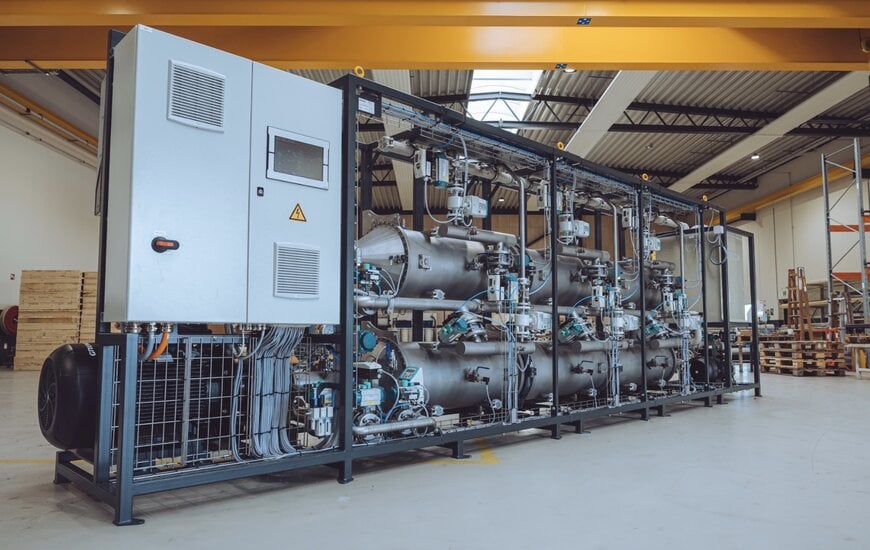
Filtration manufacturer LiqTech and industrial maintenance provider Water Works Industrial Services (WWIS) collaborated to integrate a ceramic membrane system at a new facility in Freeport, Texas. This deployment demonstrates how specialized filtration technology manages highly variable wastewater streams to enable direct fluid reuse in equipment cleaning applications.
Managing Variable Contaminants in Equipment Cleaning
WWIS processes industrial hardware, including heat exchangers, tower trays, mesh pads, and vane packs, for facilities across the Texas Gulf Coast region. The intensive cleaning required to remove scale and oil residue generates wastewater with a composition that fluctuates drastically depending on the specific equipment and the materials removed. Historically, this process demanded a continuous supply of freshwater and resulted in high volumes of wastewater requiring external disposal. Furthermore, if the wash water is reused without adequate filtration, suspended solids carry a high risk of plugging the mechanical nozzles used in the washing equipment, leading to maintenance downtime.
Implementation of Ceramic Membrane Technology
To reduce freshwater consumption and disposal volumes, WWIS integrated the LiqTech QureFlow QF-6 ceramic membrane filtration system directly into the original engineering design of its new Freeport facility. Drawing on previous operational experience with ceramic ultrafiltration at a site in Geismar, Louisiana, the engineering team selected this specific architecture based on its price, delivery timeline, and technical capacity to handle extreme variability in contaminant loads.
Ordered in August 2026, the QF-6 system utilizes ceramic ultrafiltration to process incoming wastewater feed flows estimated between 150 and 200 U.S. gallons per minute. Brett Bourne, Chemical & Environmental Processes Manager at WWIS, explained the technical requirement for the facility: "The equipment we clean brings different contaminants into our wash water, so we need treatment that can handle that variability and make the water suitable for reuse. By returning treated water to our washing operations, we expect to reduce our freshwater requirements and the amount of wastewater we need to dispose of, while reducing the risk of solids blocking our wash nozzles."
Operational Outcomes and System Reliability
By routing the industrial wastewater through the ceramic filtration unit, the system separates the suspended solids and returns the filtered permeate directly to the wash-water supply for continuous reuse. The integrated filtration architecture is expected to achieve a wastewater recovery rate exceeding 95 percent.
Fei Chen, President and Chief Executive Officer of LiqTech, noted the broader technical implications of the installation: "Industrial equipment cleaning creates wastewater that can change significantly from one job to the next, so reliable filtration is essential to making water reuse practical." This deployment validates the use of standardized ceramic membrane platforms beyond produced water treatment, demonstrating their viability in industrial wastewater treatment applications where fluid variability and operational reliability are critical.
Edited by Aishwarya Mambet, Induportals Editor, with AI assistance.
www.liqtech.com
-2296-71282-204124.png)